Top 4 Axolotl Tank Setup Kits for Beginners
Choosing the best axolotl tank is not about looks. It depends on the biological needs of this amphibian. The axolotl needs cold water. It needs a large bottom area. The water needs no strong current. The substrate must be completely safe.
- Volume and shape
- Minimum volume: 20–30 gallons for one adult axolotl. Add 10 gallons for each additional one.
- Shape: The priority is long and wide aquariums (Breeder or Long format). Axolotls spend most of their time at the bottom. Because of this, bottom area is more important than water height.
- Temperature regime (Critical!)
- Axolotls require a water temperature within 60–64 °F. It can rise to a maximum of 68 °F.The room temperature may rise above 68 °F. In this case, an aquarium chiller or special aquarium fans are definitely needed.
- The room temperature may rise above 68 °F. In this case, an aquarium chiller or special aquarium fans are definitely needed.
- Substrate (Aquarium bottom)
- Fine sand (up to 0.04 inches): This is the optimal choice. The axolotl can accidentally swallow the fine sand. In this case, it will easily pass through the gastrointestinal tract.
- Bare bottom: This is the safest option. It is also the easiest to clean.
- Strictly prohibited: Gravel, small stones, or pebbles. Axolotls suck in food along with water. They can swallow a stone. This will cause intestinal obstruction and death.
- Filtration and current
- Filter type: Sponge filter or external canister filter with flow control.
- Current strength: Axolotls do not like a strong current. Use a spray bar or diffuser nozzles. They are needed to disperse the water jet.
- Lighting and shelter
- Axolotls do not have eyelids. They are very sensitive to bright light.
- Use dim light. Also, be sure to install shelters (ceramic tubes, coconut hides, large smooth caves).
Coralife LED BioCube 32-Gallon All-in-One Glass Aquarium Kit
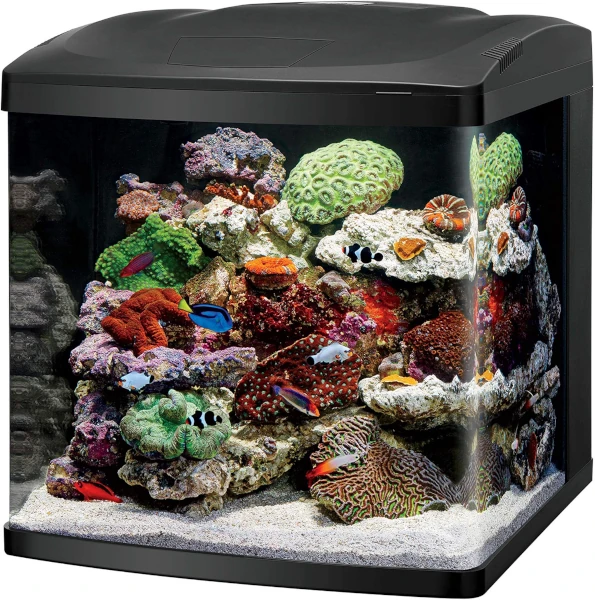
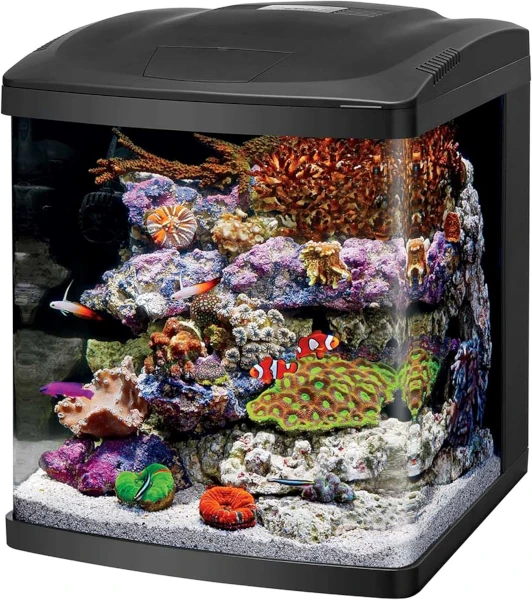
The Coralife LED BioCube 32 Gallon is an all-in-one cubic glass aquarium starter setup featuring rounded front corners. It is constructed from durable glass panels. Its dimensions measure 27.5″L x 25.5″W x 27″H for a 32-gallon capacity. The empty glass container weighs 62 pounds. The package includes a rear-integrated multi-stage filtration chamber, a submersible water pump, a media tray, a filter cartridge, a low-profile canopy hood with 3-channel LED lighting, and an automated 24-hour timer featuring sunrise and sunset cycles. It comes without an aquarium water chiller or heater.
While designed primarily for reef and planted systems, its 32-gallon volume provides excellent floor space for Axolotls. However, the enclosed canopy hood traps heat inside the water column, whereas Axolotls require cool water ranging from 60°F to 68°F. Maintaining these cold-water amphibians in this setup requires adding an external water chiller. It works best for housing 1 to 2 adult Axolotls or small bottom-dwelling invertebrates.
Pros
Cons
Marina 20-Gallon Glass Desktop Aquarium Kit
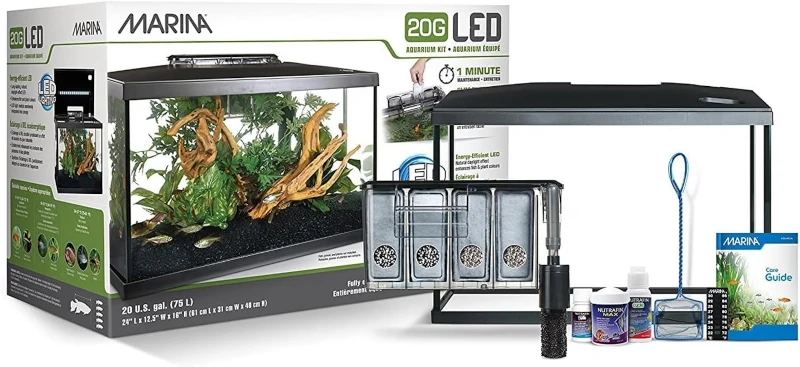
The Marina 20 Gallon LED Aquarium Kit is a rectangular glass aquarium starter set. It is constructed from durable glass with protective top and bottom plastic frames. Its dimensions measure 24″L x 12.5″W x 16.5″H for a 20-gallon capacity. The package includes a space-saving Marina Slim S20 clip-on filter with quick-change cartridges, an energy-efficient LED light system built into the canopy lid, and a cover hood. It comes without an aquarium water chiller or heater.
With its 24″L horizontal length and 20-gallon capacity, this kit provides a solid footprint for housing Axolotls. However, the enclosed canopy lid traps heat inside the water column, whereas Axolotls require cool water between 60°F and 68°F. Keeping Axolotls in this tank requires removing the lid for cooling fans or installing an external chiller. It works best for housing 1 adult Axolotl or small bottom dwellers.
Pros
Cons
Vimvins 20-Gallon 6mm Ultra-Clear Glass Desktop Aquarium Kit
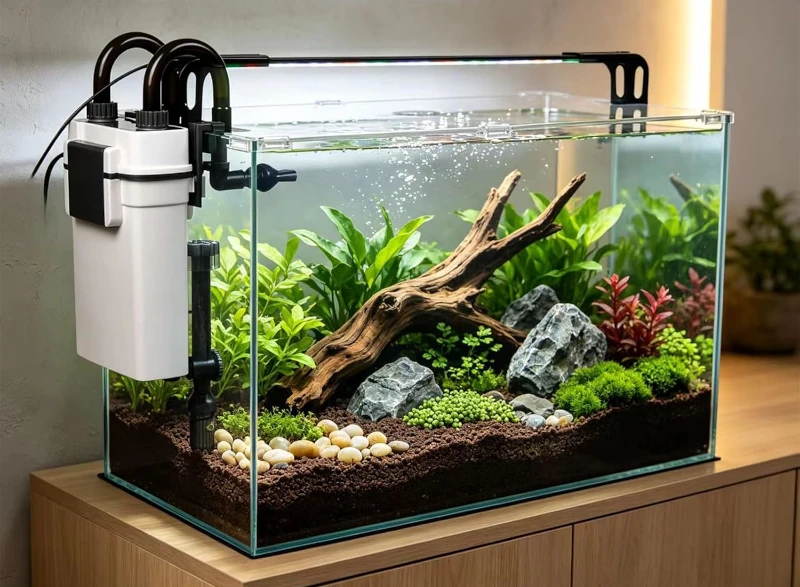
The Vimvins 20 Gallon Glass Fish Tank Starter Kit is a rectangular glass desktop aquarium set. It is constructed from durable 6mm thick ultra-clear glass. Its dimensions measure 24″L x 12.6″W x 15.74″H for a 20-gallon capacity. The starter kit weighs 22 pounds. The package includes a high-capacity filter rated at 500 L/H with bio-media and sponges, a 3-mode waterproof LED lighting fixture, a fitted canopy lid, and a non-slip base mat. It comes without an aquarium water chiller or heater.
With its 24″L horizontal layout and 20-gallon volume, this kit offers adequate floor space for housing Axolotls. However, the high-flow 500 L/H filter creates strong currents, while Axolotls prefer calm water and low temperatures between 60°F and 68°F. Keeping Axolotls requires adding a spray bar to baffle water flow and employing cooling options. It works best for housing 1 adult Axolotl or small bottom dwellers.
Pros
Cons
COOSPIDER 20-Gallon Glass Desktop Aquarium Kit
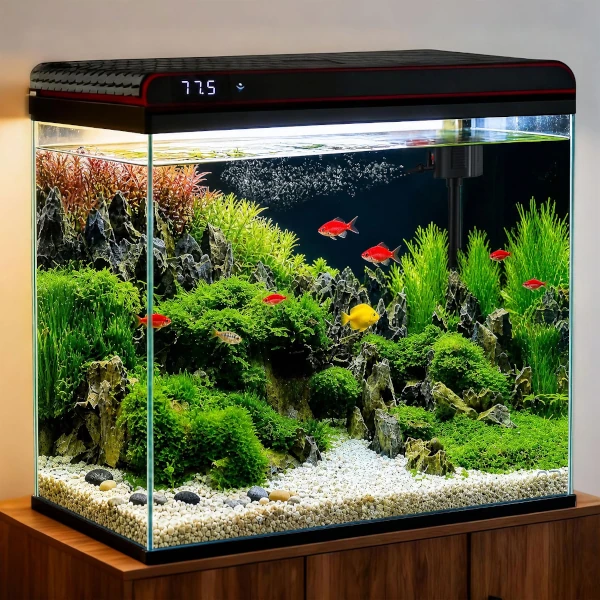
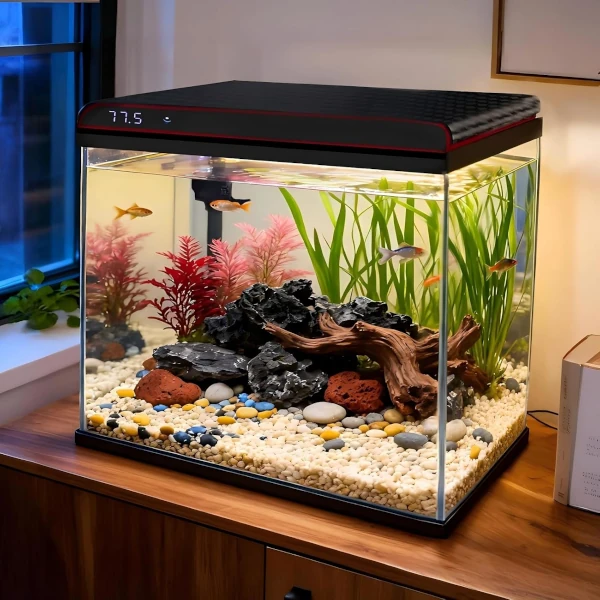
The COOSPIDER 20 Gallon Glass Fish Tank Starter Kit is a rectangular glass desktop aquarium set with a removable flip-top canopy lid. It is constructed from ultra-clear impact-resistant HD glass. It features a 20-gallon capacity. The empty starter kit weighs 32.4 pounds. The package includes a quiet 3-in-1 internal filter pump with waterfall aeration, an integrated digital water temperature display reading in °F, a 3-color LED light system, and a fitted flip lid with a feeding door. It comes without an aquarium water chiller or heater.
With its 20-gallon capacity and built-in real-time °F temperature monitor, this setup provides a useful baseline for tracking water conditions. However, the waterfall filter creates water currents, and the top lid traps ambient heat, whereas Axolotls require calm water and temperatures between 60°F and 68°F. Keeping Axolotls requires baffling the water flow and using external cooling units. It works best for housing 1 adult Axolotl or small bottom dwellers.
Pros
Cons
FAQ
The absolute minimum recommended tank size for a single adult Axolotl is 20 gallons. For housing two adult Axolotls, a larger container measuring between 29 gallons and 32 gallons is strongly recommended.
Axolotls are bottom-dwelling amphibians that spend most of their time walking along the substrate. Wide rectangular tanks with large floor surface areas provide more usable territory than tall vertical setups.
Axolotls require cool water temperatures ranging from 60°F to 68°F. Maintaining this cold environment often demands external cooling fans or a dedicated water chiller, as closed canopy lids with lights can trap ambient heat.
Axolotls produce a heavy biological waste load and require effective mechanical and biological filtration. However, high water currents cause them severe stress, making it essential to baffle filter output flows using spray bars or diffusers.
Axolotls feed by sucking water and food into their mouths, which can cause accidental ingestion of gravel leading to fatal intestinal impaction. Bare-bottom glass or extremely fine soft sand are the safest flooring options.