Top 6 Clown Fish Tanks for Your Home Marine Setup
The main difference between an aquarium for clownfish (Amphiprion) and aquaria for most other fish lies in their physiology and behavior. Clownfish have unique characteristics. They live in symbiosis with anemones. They have a strict hierarchy. They can change sex. They are also sensitive to salt water quality.
Here are the key design and equipment differences for clownfish:
- Marine Environment and Saltwater Equipment
- For Clownfish: They need a marine system. Specific gravity must be 1.023–1.026. The system requires a quality biofilter. A protein skimmer is also needed. Live rocks are placed in the tank. They provide biological filtration. Beneficial bacteria settle on them.
- For Most Other Fish: Most popular aquarium fish are freshwater species. They do not need salt. They do not need bioscrubbers. Measuring water density is not required.
- Presence of Anemones and Lighting
- For Clownfish: Clownfish can live without anemones. However, anemones bring out their natural behavior. Aquarists often add a Bubble-tip Anemone (Entacmaea quadricolor). Anemones need strong reef LED lighting. Pumps and filters must be covered with protective guards. This protects the anemone from being sucked into the equipment.
- For Most Other Fish: They do not need symbiotic invertebrates. Standard lighting is sufficient for them. Driftwood, ceramic caves, or plants work well as shelters.
- Water Circulation and Flow
- For Clownfish: Clownfish are rather weak swimmers. This is due to their body shape. They need moderate, gentle water mixing. Flow pumps are used for this. Narrow and harsh currents should be avoided. They prevent the fish from staying near their “home.”
- For Most Other Fish: Tangs or wrasses require very strong currents. Fast water flow mimics the open ocean or reef crest.
- Water Parameters, Temperature, and Stability
- For Clownfish: Water must strictly maintain tropical parameters. Temperature should be 75–81 °F. The pH level should be 8.1–8.4. Carbonate hardness (dKH) should be 8–12. Nitrate and phosphate levels must be minimal. Clownfish are sensitive to water quality and their skin mucus condition.
- For Most Other Fish: Freshwater species tolerate parameter fluctuations. They can live in soft or acidic water with a pH of 6.0–7.0. They are less demanding regarding maintenance.
- Tank Size and Group Formation
- For Clownfish: Clownfish attach themselves to their shelter. They swim very little. The standard recommended size for a pair is 20 gallons. Smaller tanks of 10–12 gallons can work for a single fish or small pair. However, smaller volumes require stricter water quality control. Keep clownfish only singly or in pairs. A third fish in a confined space will be attacked due to territoriality.
- For Most Other Fish: Marine fish need large open spaces for active swimming. For tangs, angelfish, or wrasses, tank size starts at 40–80+ gallons.
An aquarium for clownfish is a stable marine ecosystem. It features moderate water flow and quality biofiltration. It contains live rocks. It also provides safe conditions for anemones.
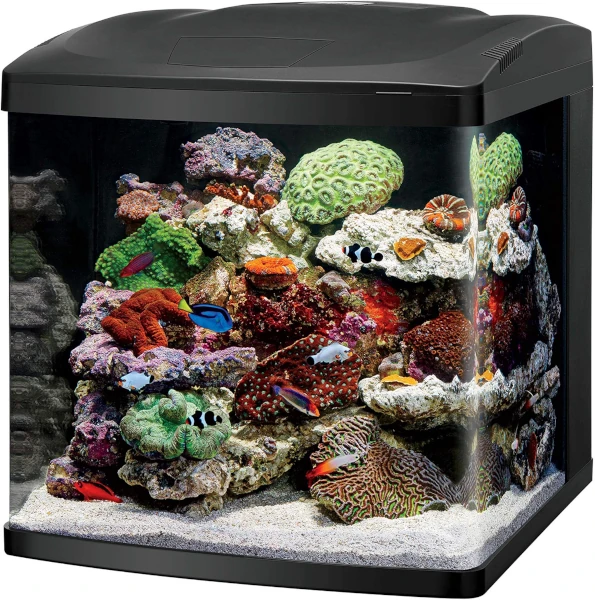
Coralife LED BioCube 16 Gallon Aquarium Starter Kit
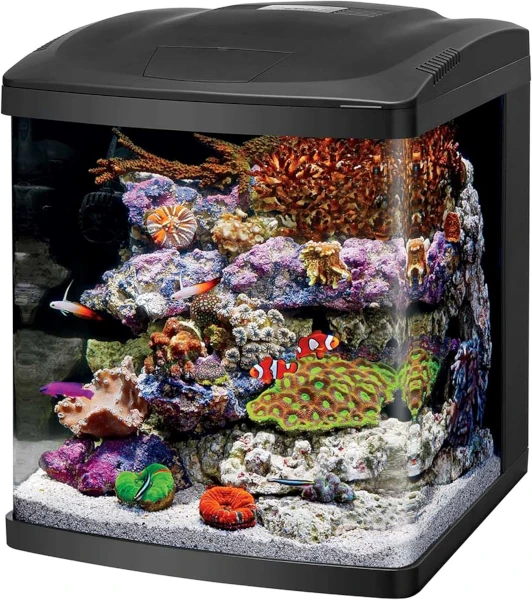
The Coralife LED BioCube 16 Gallon Starter Kit is an all-in-one cube aquarium featuring seamless curved glass edges. Its dimensions are 21.75″L x 20.25″W x 23.25″H. The kit includes a built-in rear filtration chamber, a quiet submersible pump, and a full hood with reef-capable LED lighting. The lighting features an integrated 24-hour timer with sunrise and sunset simulations.
Why is this aquarium ideal for Clownfish?
A 16-gallon capacity offers the perfect environment for a pair of Clownfish and an anemone. This kit is specifically designed for saltwater marine ecosystems out of the box. The full-spectrum reef lighting sustains live corals and host anemones. The hidden rear filtration chamber keeps powerheads and media hidden from view.
Pros
Cons
LANDEN 60P Wide 23 Gallon Rimless Aquarium
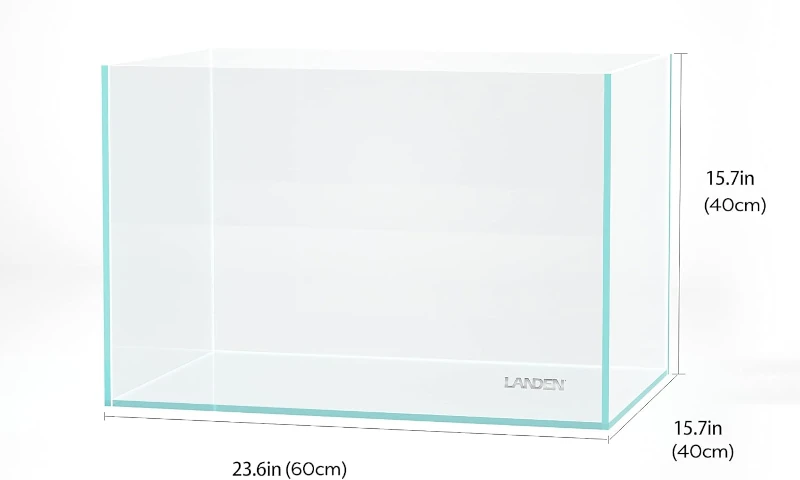
The LANDEN 60P Wide 23 Gallon Ultra Clear Glass Rimless Fish Tank is a premium rimless aquarium made of 8mm thick low-iron glass. Its dimensions are 23.6″L x 15.7″W x 15.7″H. It features 91% glass transparency and smooth bevel-cut edges. The tank comes with a protective EVA foam leveling mat.
Why is this aquarium great for Clownfish?
A 23-gallon capacity provides an ideal, stable volume for keeping a pair of Clownfish. The ultra-clear low-iron glass showcases the vivid orange colors of Clownfish and live anemones without distortion. Its open rimless design allows you to attach dedicated reef lighting and specialized marine filtration equipment.
Pros
Cons
Lifegard Aquatics 15 Gallon Rimless Aquarium
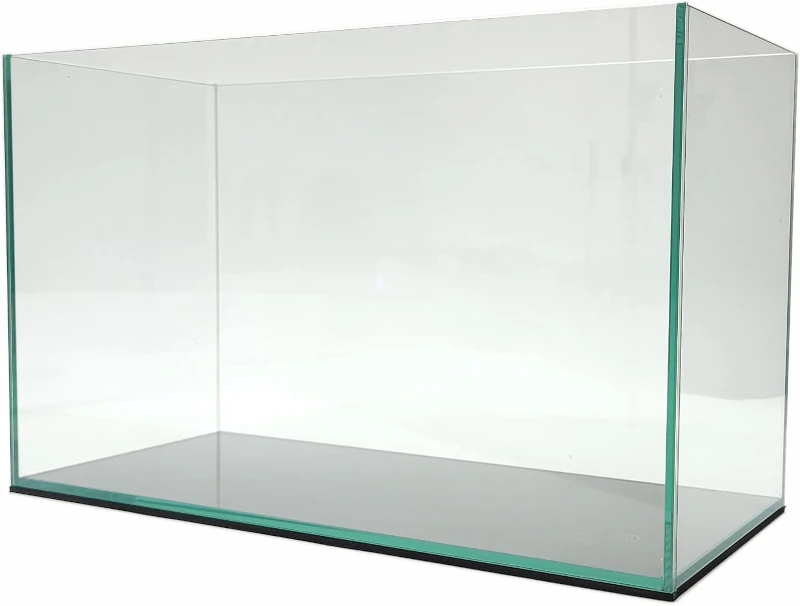
The Lifegard Aquatics 15 Gallon Rimless Aquarium is a clear glass tank built with 5mm thick glass. Its dimensions are 23.22″L x 11.02″W x 13.38″H. The glass panels are joined with high-quality German silicone. The tank comes with a dense black foam leveling mat for bottom protection.
Why is this aquarium great for Clownfish?
A 15-gallon capacity is a great size for a small pair of Clownfish. The ultra-clear glass reveals the bright orange colors of your fish without distortion. The rimless design allows complete freedom when choosing marine equipment. You can easily attach a hang-on-back filter, marine LED lights, and a protein skimmer.
Pros
Cons
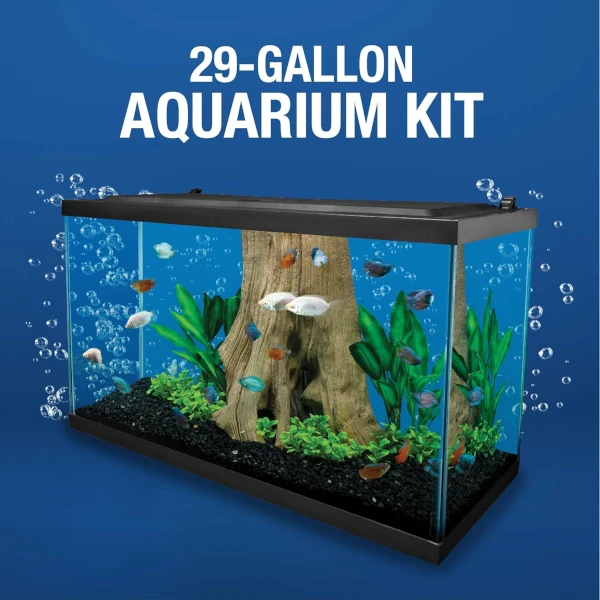
Tetra 29 Gallon Complete Tropical Fish Tank Kit
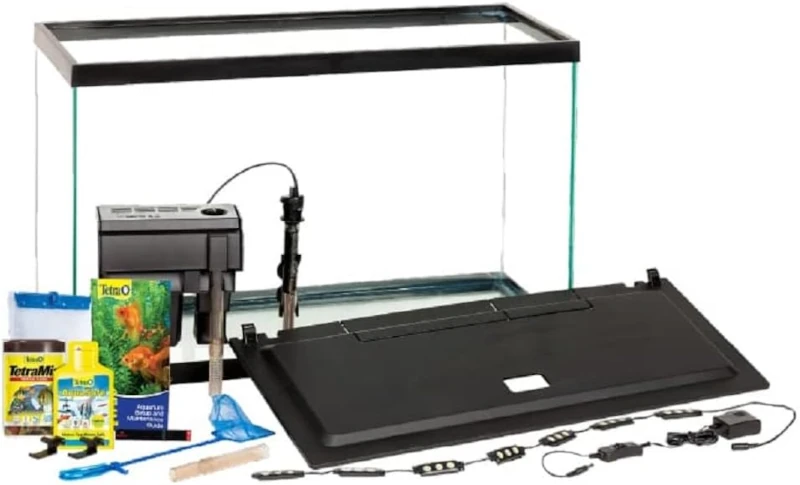
The Tetra 29 Gallon Complete Tropical Fish Tank Kit is a classic rectangular glass aquarium setup. Its dimensions are 30″L x 12″W x 18″H. The kit includes a hinged hood with energy-efficient white LEDs. It also comes with a Tetra Whisper PF 30 power filter, a 200-watt heater, a thermometer, and a fish net.
Clownfish are saltwater fish and require a marine environment. This starter kit is packaged for freshwater use. You can use the glass tank and heater for a Clownfish setup. However, you will need marine salt, a hydrometer, and specialized saltwater gear.
Pros
Cons
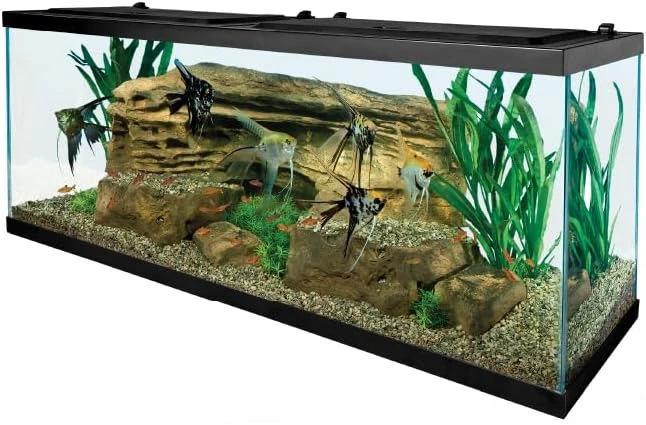
Tetra 20 Gallon Complete Tropical Fish Tank Kit
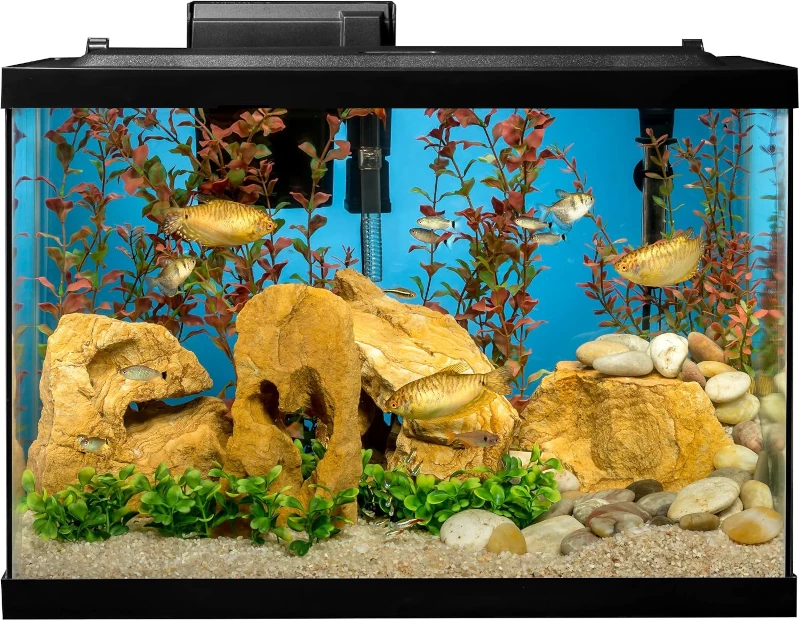
The Tetra 20 Gallon Complete Tropical Fish Tank Kit is a classic rectangular glass aquarium setup. Its dimensions are 24.2″L x 12.4″W x 16.7″H. The kit includes a hinged hood with energy-efficient white LEDs, an internal filter, an aquarium heater, a thermometer, and basic decor.
Clownfish are saltwater fish and require a marine environment. This starter kit is packaged for freshwater use. You can use the glass tank and heater for a Clownfish setup. However, you will need marine salt, a hydrometer, and specialized saltwater gear.
Pros
Cons
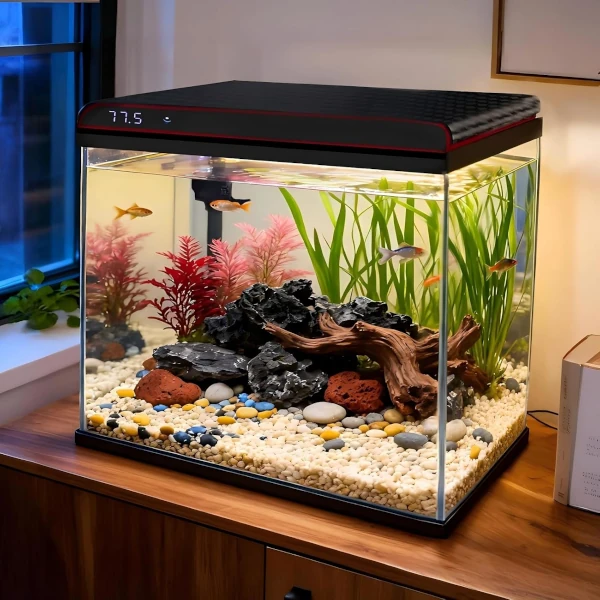
Coospider 20 Gallon Glass Fish Tank Kit
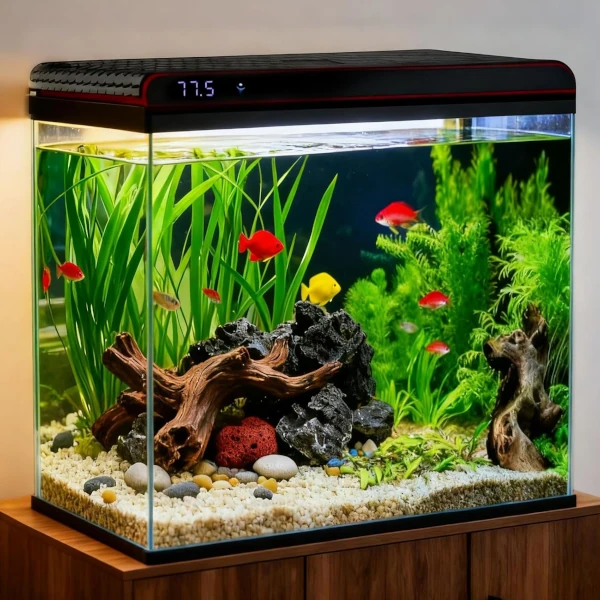
The Coospider 20 Gallon Glass Fish Tank Kit is a desktop aquarium made of ultra-clear glass. Its dimensions are 20″L x 12″W x 18.5″H. The kit features a built-in real-time temperature display in °F. It includes a quiet 3-in-1 pump, 3-color LED lighting, and a removable flip-top lid.
Clownfish are saltwater fish and require a marine environment. This starter kit is designed for freshwater use. You can use the glass tank and built-in temperature sensor for a Clownfish setup. However, you will need marine salt, a heater, a hydrometer, and dedicated marine filtration.
Pros
Cons
FAQ
A single Clownfish or a pair requires a tank size of at least 15 to 20 gallons. Smaller water volumes are harder to keep clean and properly salted. A 20-gallon tank provides good water parameter stability.
Yes, you can use the glass tank from a freshwater starter kit. However, you must upgrade the internal equipment for saltwater use. You will need marine salt, a hydrometer, live rock, and specialized marine filtration.
No, Clownfish do not require a live anemone to stay healthy. In home aquariums, they happily host in soft corals or cave structures instead. Furthermore, living anemones demand very strong, specialized reef lighting.
Clownfish require warm tropical saltwater conditions. The ideal water temperature ranges from 75°F to 80°F. Specific gravity salinity levels should remain between 1.024 and 1.026.
It is best to keep either a single Clownfish or a mated pair. You should never add more than two Clownfish to a small nano tank. Adult Clownfish are highly territorial and will fight other species members.