3 Best Angel Fish Tanks for Beginners and Pros
Angelfish are elegant freshwater fish from the cichlid family. They are known for their grace and majestic appearance. They have a tall body and long vertical fins. Because of this unique anatomy, choosing the right Angel Fish Tank comes with strict requirements.
Essential Requirements for Angelfish
- Tank Height (The Most Critical Factor). An adult angelfish can grow up to 6–8 inches in length and 8–10 inches in height (including fins). Because of this, standard shallow tanks are unsuitable. The absolute minimum water height is 20 inches, though models measuring 22–24 inches tall are strongly recommended.
- Tank Volume.
- For a single pair: The minimum recommended volume is 30 gallons (preferably a 30 Gallon Extra High tank setup).
- For a small group (4–6 fish): A tank size of at least 55 gallons or larger is required.
- Filtration and Flow. Angelfish require high-quality biological and mechanical filtration, but the water flow must remain soft and gentle. Due to their tall fins, these fish tire quickly if subjected to strong internal currents.
- Aquascape and Environment. Tall plants (such as Amazon Swords or Vallisneria) and vertical driftwood branches create an ideal environment. They provide natural cover and replicate their native Amazonian river habitats.
Key Signs of a High-Quality Angelfish Tank
You can be confident you’ve selected the best possible tank if it meets the following criteria:
- Ample Clearance Above and Below: When swimming naturally, the fish’s dorsal and ventral fins remain fully extended without touching the substrate or water surface (leaving at least 3–4 inches of clear buffer space).
- Gentle Currents: Water stays well-filtered without causing turbulence, allowing the fish to swim effortlessly.
- Stable Water Parameters: Water temperature is consistently maintained between 75–82 °F.
Why Do People Search for 10-Gallon Angel Fish Tank, and Why Is It a Mistake?
- Buying Juveniles: Pet stores typically sell juvenile angelfish when they are only a few weeks old and no larger than a coin. Beginners often assume a 10-gallon tank is plenty of space for a fish that size.
- Rapid Growth Rate: Beginners frequently underestimate how quickly angelfish grow, reaching their full adult size in under a year.
- Confusion with Other Species: Novices often apply tank size rules intended for nano fish like Bettas or Guppies—for which 10 gallons is great—to angelfish.
In such a small tank, angelfish suffer skeletal deformities from insufficient height, experience severe chronic stress, become stunted, and face a drastically shortened lifespan. The only time experienced fish keepers utilize a 10-gallon tank for angelfish is as a temporary breeding setup or a short-term quarantine tank for fry.
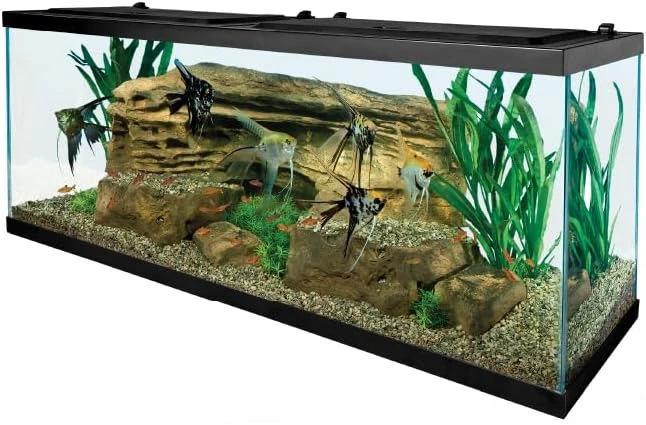
Tetra 29 Gallon Complete Tropical Fish Tank Kit
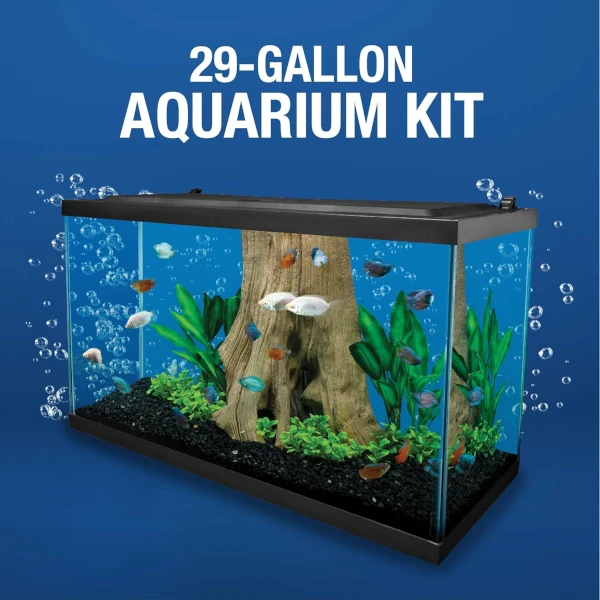
The Tetra 29 Gallon Complete Tropical Fish Tank Kit is a classic starter setup made of durable rectangular glass. Measuring 30″L x 12″W x 18″H, the kit includes a hinged LED hood, a Tetra Whisper PF 30 power filter, a 200-watt heater, a thermometer, a fish net, and water conditioner samples.
Why is this aquarium great for Angelfish?
Angelfish have tall, disk-shaped bodies and long vertical fins, making aquarium height crucial. The 18-inch height provides the essential vertical swimming room Angelfish need to feel comfortable. A 29-gallon capacity is a great starter size for a pair of young or adult Angelfish. The included 200W heater ensures the water stays reliably warm for these tropical fish.
Pros
Cons
Fluval Flex 32.5 Gallon Aquarium Kit
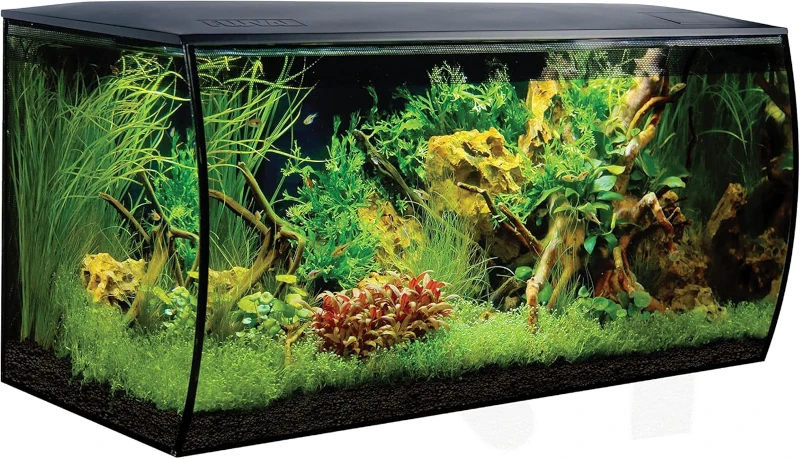
The Fluval Flex 32.5 Aquarium Kit is a stylish setup featuring a curved front glass panel. Measuring 32.5″L x 15.75″W x 15.35″H, it incorporates a hidden rear 3-stage filtration system. The kit is equipped with fully customizable plant-capable LED lighting controlled via the FluvalSmart mobile app.
Why is this aquarium great for Angelfish?
A 32.5-gallon capacity offers ample swimming room for a pair of adult Angelfish. The 32.5-inch length gives these fish plenty of horizontal space to move. Dual directional nozzles on the filter let you diffuse the water flow, creating the calm current Angelfish prefer. The high-output LED light supports lush plant growth, giving Angelfish natural cover.
Pros
Cons
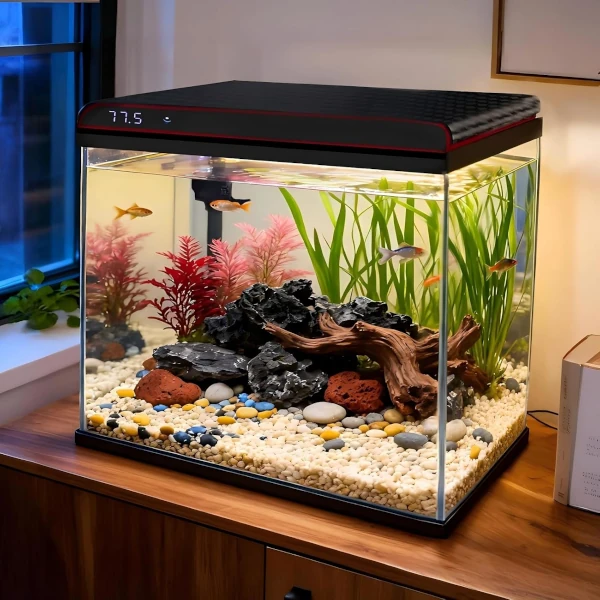
Coospider 20 Gallon Glass Fish Tank Kit
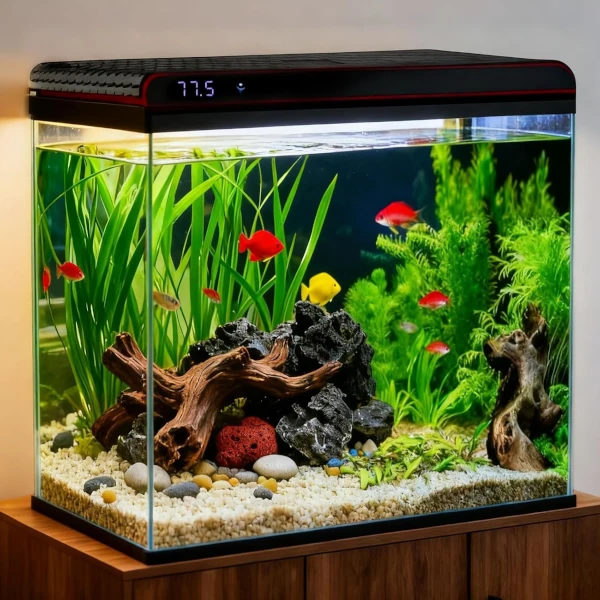
The Coospider 20 Gallon Glass Fish Tank Kit is a rectangular setup made of ultra-clear glass featuring a real-time water temperature monitor. Measuring 20″L x 12″W x 18.5″H, the kit includes a quiet 3-in-1 pump for filtration and oxygenation, along with a 3-color LED lighting system. It features a convenient flip-top lid for easy feeding and routine maintenance.
Why is this aquarium good for Angelfish?
Angelfish have tall bodies and long vertical fins that require deeper water. The 18.5-inch height provides excellent vertical space for young fish to swim naturally. A 20-gallon volume serves as a solid starter or grow-out tank for a young pair of Angelfish. The built-in temperature display allows you to monitor warm tropical water conditions easily.
Pros
Cons
FAQ
A single pair of Angelfish requires a tank of at least 29 gallons. If you want to keep a small group of 4 to 6 fish, choose an aquarium that is 55 gallons or larger. Smaller tanks cause stress and stunt their growth.
Angelfish have tall, disk-shaped bodies and long vertical fins. Fully grown adults can reach 8 to 10 inches in total height. An aquarium should be at least 18 inches tall so they can fully extend their fins without dragging on the bottom.
Angelfish are tropical cichlids native to the Amazon basin. They thrive best in water temperatures between 76°F and 82°F (78°F to 80°F is ideal). An aquarium heater is essential to maintain this warm range.
Yes, Angelfish do well with peaceful, medium-sized tankmates like larger tetras or corydoras. However, avoid keeping them with tiny species or fry (like neon tetras). As natural predators, adult Angelfish will eat fish small enough to fit in their mouths.
Angelfish prefer a gentle or moderate water current. Their tall bodies make swimming difficult in strong water movement. Choose a filter with adjustable flow settings or direct the outlets toward the glass to diffuse the current.