Top 10 Turtle Fish Tanks Built for Active Swimmers and Basking Comfort
The best tank for an aquatic turtle should be wide, shallow, and include a mandatory dry land area. The main rule of thumb when choosing is that the turtle must be able to turn around freely in the water without hitting its shell against the walls.
- Choosing the Tank Size and Shape. Compact 5–15 gallon tanks work well for a small turtle to start with. As the turtle grows, it is moved into standard home-sized tanks of 20–40 gallons.
- Width matters more than height. Choose low, wide Breeder-style models. It is more comfortable for a turtle to swim horizontally than in a tall, narrow column of water.
- Room to maneuver. The length of the tank should be at least 3–4 times the length of the shell, and the width should be 2 times the length.
- Plastic tubs as an alternative. Instead of expensive glass, low food-grade plastic containers of the required volume are often used. They are lightweight, inexpensive, and will not break during cleaning.
- Dry Land Area Basking Platform. A turtle must be able to climb completely out of the water to dry its shell and warm up. Without a dry spot, the shell begins to soften or develop fungus.
- Floating dock with suction cups. The cheapest and simplest option for small tanks and young turtles. It automatically adjusts to the water level.
- Glued-in glass ramp. A sturdy option for grown, heavy turtles that will not detach under their weight. Artificial turf or a ribbed mat is glued to the ramp for easy climbing.
- Above-tank topper. The basking platform sits on top of the tank. This allows you to fill almost the entire tank with water and does not take away swimming space.
- Structural Safety. Turtles are very strong, active, and prone to escaping, so the setup must be well thought out.
- Wall height. There should be at least 6–8 inches of space from the surface of the basking platform to the top edge of the glass. Otherwise, the turtle can easily pull itself up with its front legs and fall onto the floor.
- Glass thickness. Choose tanks with thick glass and strong seams, as turtles constantly bump their shells against the walls or may accidentally knock a rock into the glass.
- Bare bottom without fine substrate. It is best to leave the glass bottom completely bare or place a few large flat stones bigger than the turtle’s head. Turtles often swallow fine gravel.
GOZILLA PC Aquatic Turtle Starter Tank Kit with 360° Adjustable UVA/UVB Lamp
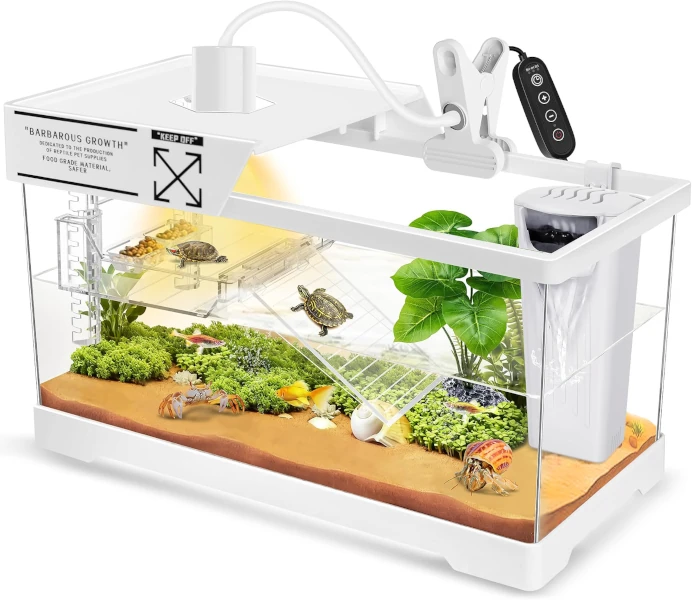
The GOZILLA Aquatic Turtle Tank + Lamp + Filter Kit is an all-inclusive white starter habitat featuring a height-adjustable basking platform and essential life-support gear for small turtles. The tank is crafted from upgraded shatter-resistant clear polycarbonate and topped with a ventilated habitat lid plus a bottom drainage plug. Its outer dimensions measure 15.75″L x 7.9″W x 9″H. The package includes the tank and lid, an adjustable hanging basking platform, a 3.5W water filter with two filter cartridges, a 360-degree flexible basking lamp with 25W and 35W UVA/UVB bulbs and auto shut-off timer, a decorative plant, natural rocks, colored beads, a dip net, a sponge brush, and a drainage rubber. It comes without a submersible water heater or thermometer.
With its deep swimming zone and height-adjustable hanging platform, this starter kit balances active swimming and warm sunbathing on desks or shelves. The built-in 2, 4, or 8-hour lamp timer automates daily heat and UV exposure while the 3.5W filter and drain port simplify routine cleaning. Due to its compact 15.75″L x 7.9″W x 9″H footprint, it works best for baby aquatic turtles such as red-eared sliders or musk turtles, as well as newts, frogs, crayfish, or crabs.
Pros
Cons
LKTOLS 18.7″ Lightweight Acrylic Turtle Starter Tank Kit with UVB Heat Lamp
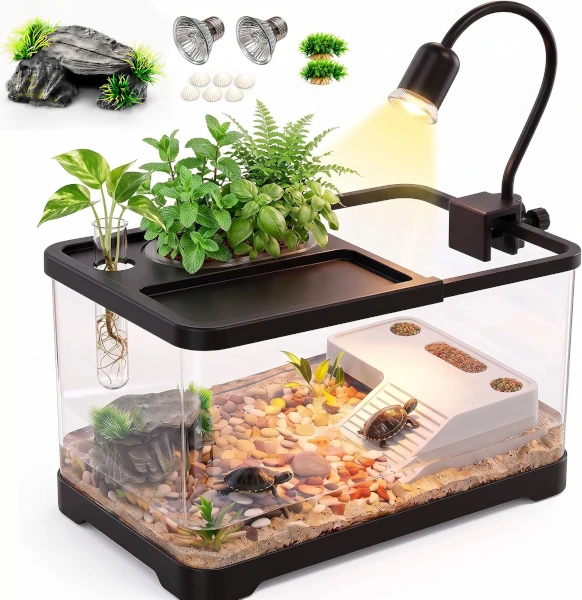
The LKTOLS Acrylic Turtle Tank Starter Kit is a lightweight, shatterproof starter habitat featuring an elongated swimming profile and a complete bundle of decor and heating gear for small turtles. The tank is crafted from high-definition heavy-duty acrylic with a seamless hole-free bottom for leak-proof reliability, smooth rounded edges, and a partial top cover with a built-in hydroponic plant basket. Its outer dimensions measure 18.7″L x 8.3″W x 8.3″H. The package includes the acrylic tank, a basking UVB heat lamp with a spare bulb, a climbing basking platform, a rockery ornament, decorative river stones, four artificial aquatic plants, a six-piece seashell set, and a fish net. It comes without a water filter or submersible water heater.
With its roomy swimming lane, anti-slip basking ramp, and overhead hydroponic planter basket, this enclosure creates a lively mini-ecosystem on desks, dressers, or kids’ bedroom tables. The seamless bottom eliminates leaky drain valves while the lightweight acrylic frame makes carrying the tank to a sink for rinsing simple. Due to its 18.7″L x 8.3″W x 8.3″H dimensions, it works best for baby aquatic turtles, ornamental crabs, crayfish, newts, or dwarf frogs.
Pros
Cons
HYPESIDE Large Complete Aquatic Turtle Starter Tank Kit
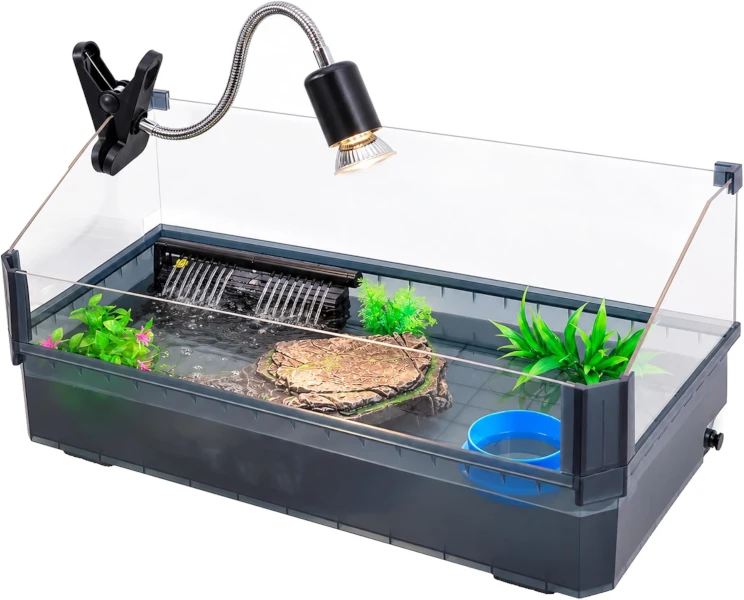
The HYPESIDE Complete Large Turtle Tank Kit is a spacious all-inclusive black starter habitat featuring tall secure walls and essential care accessories for aquatic turtles. The tank is crafted from durable transparent acrylic offering 360-degree viewing at a much lighter weight than glass, complete with a built-in drainage outlet for fast water changes. It comes in a generous Large size. The package includes the acrylic tank, a basking platform with ramp, a quiet low-water turtle filter, a UVA/UVB basking lamp, a floating feeding ring, three decorative plants, and hydroponic planters for live plants. It comes without a submersible water heater or thermometer.
With its roomy swimming section, warm basking zone under the UV lamp, and top hydroponic planters, this kit creates an attractive, balanced habitat in living rooms, bedrooms, or offices. The floating feeding ring keeps turtle pellets contained in one spot while the low-water filter and drainage port simplify upkeep for busy owners. Thanks to its Large layout, it works wonderfully for baby and growing aquatic turtles such as red-eared sliders, as well as newts, crabs, or amphibians.
Pros
Cons
AZV 6.57-Gallon Medium Turtle Starter Tank Kit
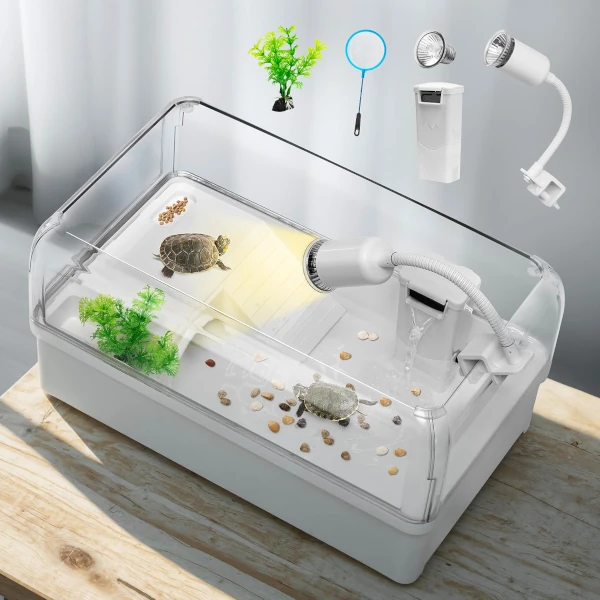
The AZV Turtle Tank Starter Kit 6.57 Gallon is a practical starter habitat for baby aquatic turtles featuring five activity zones and built-in bottom drainage. The tank combines four clear acrylic walls for a 360-degree view with a durable ABS plastic base and a raised curved fence that helps prevent escapes. Its outer dimensions measure 17.12″L x 10.24″W x 8.66″H for a 6.57-gallon capacity. The package includes the habitat with a textured ramp, elevated basking platform, and built-in hideout, plus a quiet water filter, lamp and bulb, decorative plant, and mini net. It comes without a submersible water heater or thermometer.
With dedicated areas for swimming, diving, climbing, basking, and hiding, this kit supports healthy daily habits for young turtles on desks, dressers, or classroom shelves. Built-in bottom drainage and filter circulation make routine water changes faster and keep water fresher between cleanings. Due to its 6.57-gallon capacity and 17.12″L x 10.24″W x 8.66″H footprint, it works best for baby and small aquatic turtles like red-eared sliders or yellow-bellied sliders during their early growth stage.
Pros
Cons
XuanFain 12.2″ Baby Turtle Starter Tank Kit with Dimmable UVA/UVB Lamp
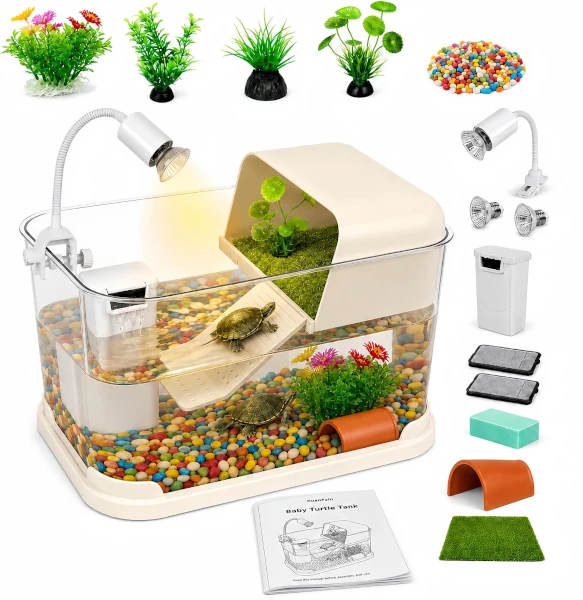
The XuanFain Baby Turtle Tank Starter Kit is a compact cream-white starter habitat built from clear polycarbonate with adjustable UV lighting and starter decor for baby aquatic turtles. The tank is crafted from durable impact-resistant polycarbonate for lightweight handling and combines a swimming area, an elevated dry basking platform with a textured ramp, and a ceramic hideout. Its outer dimensions measure 12.2″L x 7.64″W x 7.9″H. The package includes the tank with ramp and platform, a gooseneck UVA/UVB lamp with an inline dimmer and two 25W bulbs, a low-water filter with two replacement pads, a ceramic hideout, a grass mat, four plants, 500 g of stones, a cleaning sponge, and an illustrated manual. It comes without a submersible water heater or thermometer.
With its textured climbing ramp, ceramic hideout, and dimmable basking lamp, this kit supports daily swimming and warm basking on desks or shelves. The step-by-step manual simplifies first-time setup while the low-water filter keeps shallow water moving. Due to its compact 12.2″L x 7.64″W x 7.9″H footprint, it works best for baby and small aquatic turtles with shell lengths up to 3.5 inches.
Pros
Cons
tuhaoking XL Aquatic Turtle Starter Tank Kit
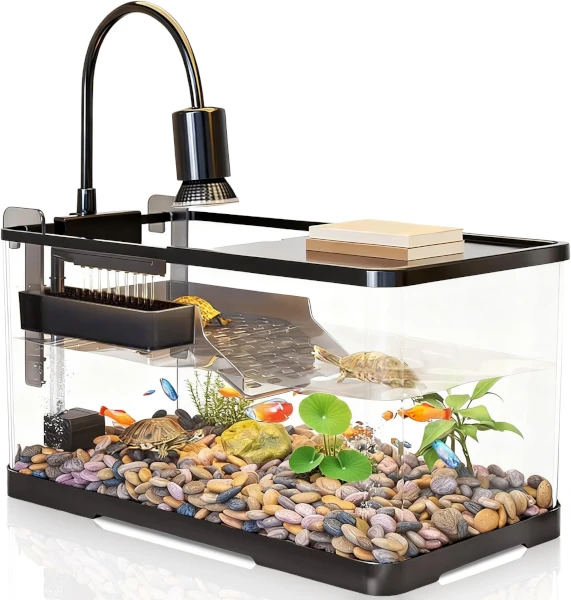
The tuhaoking Turtle Tank Starter Kit XL is a spacious XL starter habitat built with a one-piece acrylic body, a height-adjustable filter balcony, and multi-media filtration for aquatic turtles. The tank is crafted from shatter-resistant clear acrylic and includes a top lid, a bottom drainage port, and an elevated rain-filtering balcony platform. Its outer dimensions measure 21.65″L x 12.28″W x 12.28″H. The package includes the tank and lid, a height-adjustable basking and rain-filtration balcony, a light fixture with a UVA/UVB bulb, a water pump, a pack of filter balls, wood-grain stones, and three decorative plants. It comes without a submersible water heater or thermometer.
With its roomy XL layout, deep swimming water, and rain-style filtration balcony, this setup supports active swimming and warm basking on wide stands or tables. The pump paired with filter balls and stones helps circulate and polish the water while bottom drainage speeds up water changes. Due to its 21.65″L x 12.28″W x 12.28″H footprint, it works best for baby and growing aquatic turtles, as well as crabs, small fish, amphibians, or shrimp.
Pros
Cons
Clioran 7.7-Gallon Double-Layer Turtle Starter Tank Kit with Top Basking Loft
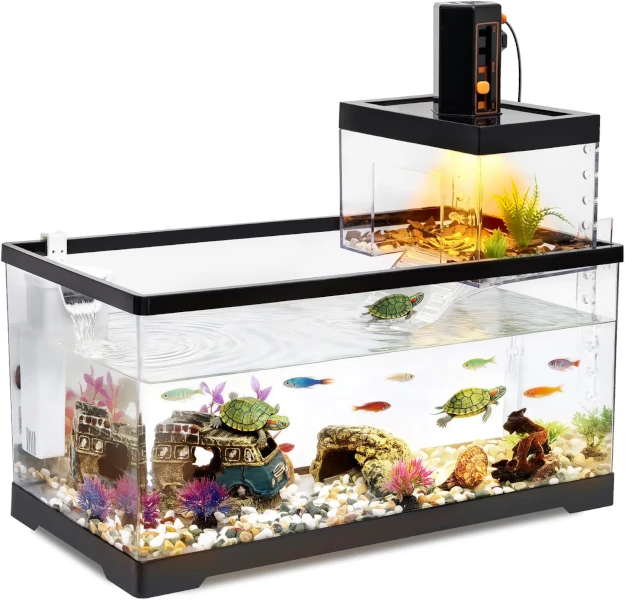
The Clioran Turtle Tank Kit with Top Basking Platform is a double-layer starter habitat featuring an elevated house-style basking loft and complete care accessories for young aquatic turtles. The tank is crafted from high-hardness clear polycarbonate with a thick non-slip base and bottom drainage, topped by an enclosed basking deck positioned above the waterline. Its outer dimensions measure 19.7″L x 9.5″W x 9.5″H for a 7.7-gallon capacity. The package includes the tank, the upper enclosed basking platform, two basking lamps with bulbs, a water filter with two replacement plates, a hide cave, a car ornament, a stone pack, and six artificial plants. It comes without a submersible water heater or thermometer.
With its upper basking platform positioned above the tank rim, the lower basin stays completely open for deep swimming while the enclosed loft prevents escapes. Built-in bottom drainage and filter circulation simplify water upkeep on desks or dressers. Due to its 7.7-gallon capacity and 19.7″L x 9.5″W x 9.5″H footprint, it works best for baby and juvenile aquatic turtles such as red-eared sliders, as well as small fish, newts, or crabs.
Pros
Cons
KAKOOTI 20″ One-Piece Polycarbonate Aquatic Turtle Tank
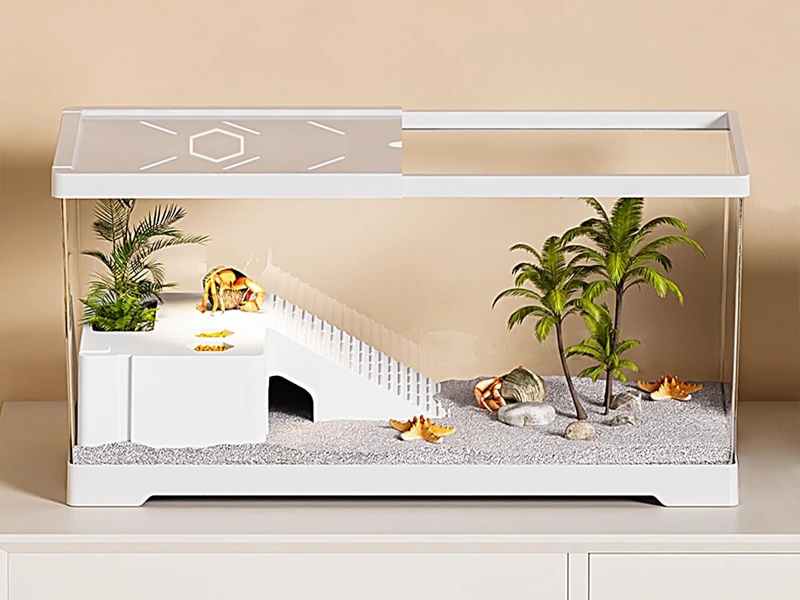
The KAKOOTI Turtle Fish Tank 20″ x 9.5″ x 9.5″ is a spacious one-piece white aquaterrarium featuring an anti-slip dry basking area and bottom drainage for aquatic turtles. The tank is molded from shatter-resistant high-transparency polycarbonate requiring zero assembly out of the box, complete with an integrated textured climbing ramp, a dry resting platform, and a bottom drain valve. Its outer dimensions measure 20″L x 9.5″W x 9.5″H. The package includes the one-piece tank with its built-in platform and drain port. It comes without a top lid, UVA/UVB basking lamp, water filter, submersible heater, or decor.
With its elongated swimming basin and textured non-slip ramp, this habitat gives aquatic pets easy transitions between deep water and dry resting space on stands or wide desks. The bottom drainage outlet lets owners empty dirty water quickly without lifting or tipping the tank. Due to its 20″L x 9.5″W x 9.5″H footprint, it works best for juvenile and growing aquatic turtles with shell lengths up to 6.5 inches, as well as crayfish, crabs, amphibians, or shrimp.
Pros
Cons
RunDuck 12″x7″x6″ Shatter-Resistant PC Turtle Starter Tank Kit
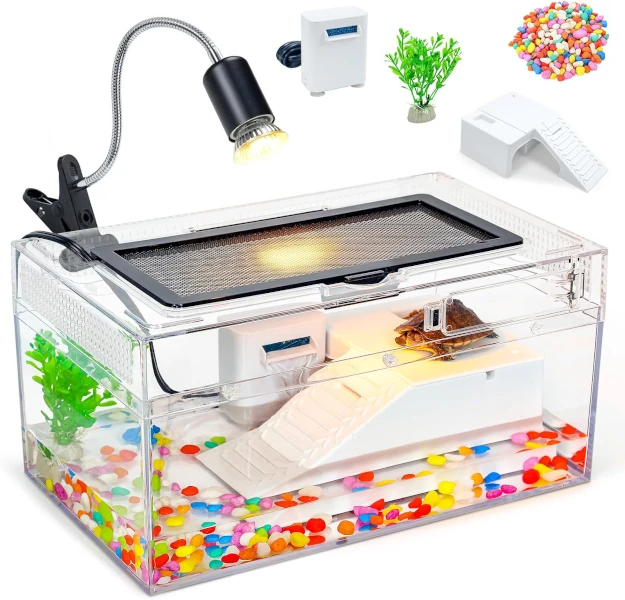
The RunDuck 12x7x6 Turtle Tank Kit is a compact starter habitat built from clear polycarbonate with a heat-resistant metal mesh top and essential care gear for tiny aquatic turtles. The tank is crafted from durable shatter-resistant polycarbonate offering crisp visibility, paired with a 3D airflow ventilation system, a high-temperature metal screen cover, and an anti-slip basking platform with a climbing ramp. Its outer dimensions measure 12″L x 7″W x 6″H. The package includes the tank with basking platform and metal mesh lid, a heating lamp, and a water filter. It comes without a submersible water heater, thermometer, or decor.
With its heat-resistant metal screen top and continuous 3D ventilation, this enclosure prevents stuffiness and safely supports overhead warming lamps on desks or shelves. The textured anti-slip platform gives tiny pets an easy climb out of the water while the included filter keeps water circulating. Due to its compact 12″L x 7″W x 6″H footprint, it works best for hatchling aquatic turtles, dwarf frogs, newts, crabs, or shrimp.
Pros
Cons
HSIFMATE 12 Acrylic Aquatic Turtle Starter Tank Kit
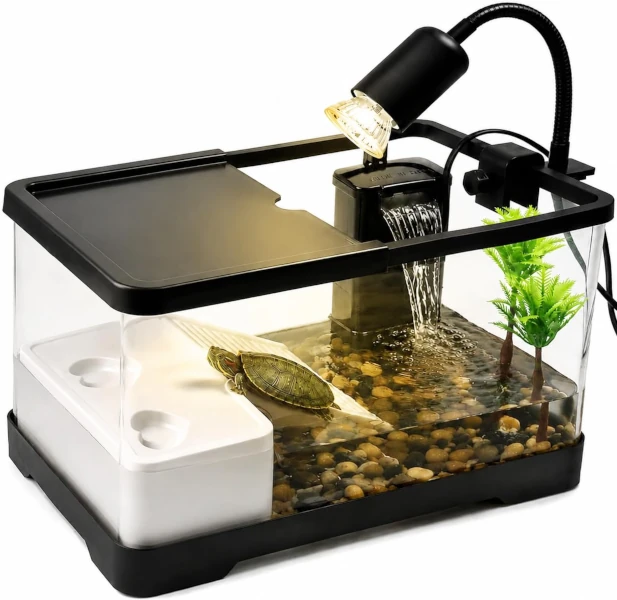
The HSIFMATE Turtle Tank Kit is a complete starter habitat built from thicker clear acrylic with an adjustable UV lamp, waterfall filter, and bottom drain for baby aquatic turtles. The tank is crafted from durable high-transmission acrylic and features a top lid, dedicated zones for swimming, climbing, feeding, and resting, plus a bottom drainage outlet. Its outer dimensions measure 12″L x 7.8″W x 7.2″H. The package includes the tank and lid, a climbing basking platform, a clip-on lamp with 25W and 50W UVA/UVB bulbs, a waterfall filter with one filter plate, two decorative plants, a bag of stones, and a net. It comes without a submersible water heater or thermometer.
With separate spaces for swimming, eating, climbing, and dry sunbathing, this starter kit supports healthy daily routines for tiny turtles on desks or shelves. The waterfall filter creates a gentle shower effect that keeps water clear and reduces odors while bottom drainage speeds up water changes. Due to its compact 12″L x 7.8″W x 7.2″H footprint, it works best for baby aquatic turtles under 3 inches in shell length such as young red-eared sliders, as well as small fish, newts, or crabs.
Pros
Cons
FAQ
Aquatic turtles breathe air with lungs and must climb onto a completely dry basking platform every day to dry off and warm up under a heat lamp. Unlike standard fish tanks, turtle habitats feature textured climbing ramps, raised anti-escape walls, and convenient bottom drainage outlets for fast water changes.
Compact starter habitats measuring between 12 and 20 inches long are designed specifically for hatchlings and juveniles with shells up to 3 to 6.5 inches. Because red-eared sliders and yellow-bellied sliders grow rapidly, a starter kit typically lasts for the first 6 to 12 months before the turtle needs a much larger adult enclosure.
In the wild, turtles rely on sunlight for warmth and ultraviolet rays to produce vitamin D3 and absorb dietary calcium. Without daily exposure to a UVA/UVB lamp above the dry platform, a turtle can develop soft or deformed shells, sluggish digestion, and weakened immunity.
Baby turtle habitats keep water shallow so young swimmers can easily reach the surface to breathe, which prevents standard tall filters from working properly. Low-water and waterfall filters operate reliably in shallow depths while keeping water oxygenated and clear of waste odors.
Nearly all starter bundles come without a submersible water heater or thermometer. If room temperatures drop below a comfortable 75°F to 78°F, adding a protected submersible heater is essential to keep water warm and prevent your turtle from becoming lethargic or ill.