Top 10 Reef Aquariums for Keeping Corals at Home
To choose the best coral fish tank (reef aquarium), you need to consider more than just its capacity. Lighting, filtration, water circulation, and the ability to maintain stable water parameters are equally important. Here are the main criteria to consider.
- Determine the Ideal Aquarium Size. The ideal tank size depends on the number and types of corals you plan to keep, as well as your experience level.
- 5–10 gallons — a small nano reef that requires particularly careful monitoring of water parameters.
- 15–30 gallons — a good option for beginners who want to keep several types of corals.
- 40–75 gallons — provides more room for a variety of corals and a more stable ecosystem.
- 90+ gallons — suitable for larger reef setups with a diverse selection of corals and marine inhabitants.
- Check the Lighting System. Corals need specialized lighting that provides the appropriate spectrum and sufficient light intensity. Look for:
- LED lights designed for marine aquariums.
- Adjustable light intensity and spectrum.
- Even light distribution throughout the aquarium.
- Lighting that matches the needs of the coral species you plan to keep.
- Evaluate Filtration and Water Circulation. A good filtration system helps maintain water quality and control the buildup of organic waste. Ideally, your setup should include:
- Mechanical filtration to remove debris and suspended particles.
- Biological filtration to support beneficial bacteria.
- A protein skimmer to remove organic compounds.
- Powerheads to create the water movement that corals need.
- Make Sure the Aquarium Can Maintain Stable Water Parameters. Healthy coral growth depends on maintaining appropriate and consistent water conditions. Monitor the following parameters:
- Temperature: 24–26°C (75–79°F).
- Salinity: 1.025–1.026 SG.
- pH: 8.1–8.4.
- Calcium: 400–450 ppm.
- Magnesium: 1,250–1,350 ppm.
- Alkalinity (KH): 7–9 dKH.
- Consider the Types of Corals. Different corals have different requirements for lighting, water flow, and water chemistry.
- Soft corals — soft-bodied corals that are generally more suitable for beginners.
- LPS corals — large polyp stony corals that require appropriate lighting and stable water chemistry.
- SPS corals — small polyp stony corals that typically require more intense lighting, strong water circulation, and especially stable water parameters.
Main Recommendation: For your first reef aquarium, consider a 20–30-gallon model with quality LED lighting, effective filtration, and adjustable water circulation. This will provide more opportunities to keep different types of corals than a very small nano aquarium.
Coralland 8-Gallon Rimless Low-Iron Glass Marine Aquarium
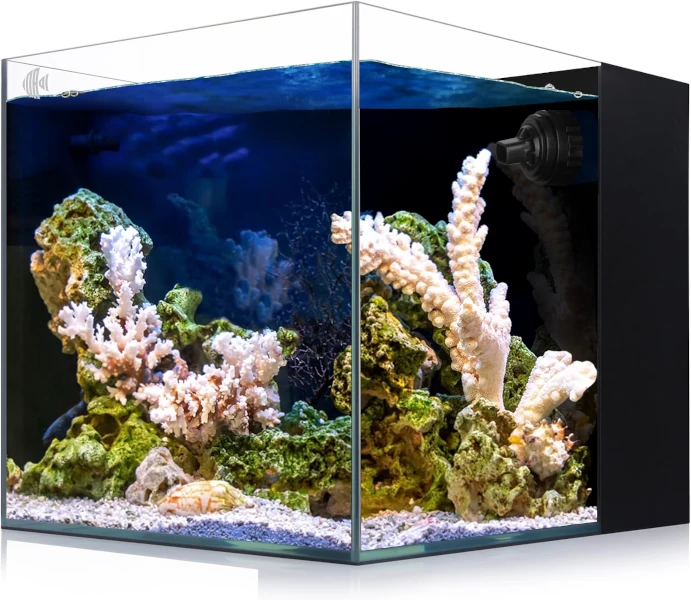
The Coralland 8-Gallon Saltwater Aquarium is a rectangular rimless desktop glass tank built for marine setups and corals. It is constructed from ultra-clear low-iron glass with precision 45-degree angled corner joints. Its outer dimensions measure 13.8″L x 11.8″W x 11.8″H for a total volume of 8 gallons. The empty glass setup weighs 21.3 pounds. The internal layout features a 5.5-gallon front display section and a 2.5-gallon rear sump chamber. It comes as a bare tank without a cover lid, lighting unit, return pump, filter media, or heater.
With its dual-chamber layout featuring a 5.5-gallon display and a 2.5-gallon rear sump, this rimless setup provides a neat structure for reef keeping. The total 8-gallon capacity suits small soft corals, mushrooms, or marine hermit crabs. The rear sump conceals equipment like filter sponges, heater units, or mini protein skimmers out of view. It works best for housing delicate coral polyps, marine snails, or small zoanthids.
Pros
Cons
Hanging Clear Acrylic Drip Acclimation Container Box for Corals & Marine Fish
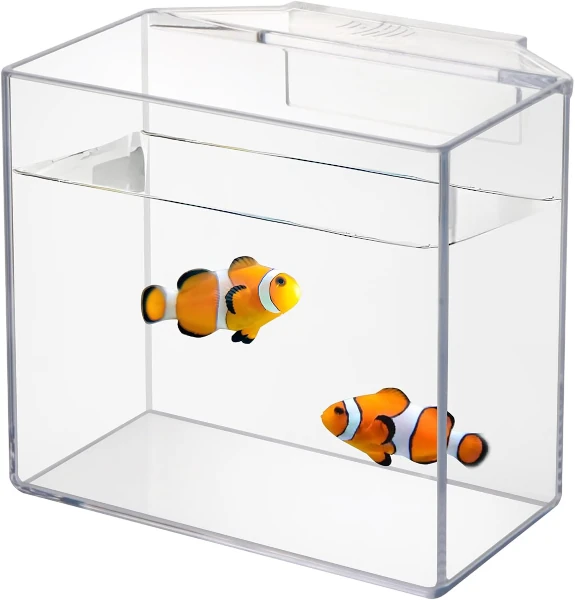
The Drip Acclimation Container for Fish & Corals (Small) is a compact hanging acrylic box built for marine acclimation procedures. It is constructed from clear durable plastic with a 1-inch built-in rim hanger. Its dimensions measure 5.13″L x 2.5″W x 4.5″H with a volume of 56.88 cubic inches (around 0.25 gallons). The empty acrylic container weighs 9.6 ounces. It is designed for use alongside standard drip acclimation airline tubing. It comes as a bare container without tubing, drip valves, lights, or pumps.
With its convenient rim hanger and 56.88 cubic inch capacity, this box serves as a specialized auxiliary tool. It allows aquarists to perform gradual drip acclimation for new coral frags, marine snails, shrimp, or small fish before placement into the main reef display. It is not a permanent housing tank and works strictly as a temporary transition box for coral and marine life adaptation.
Pros
Cons
HelloReef 15-Gallon All-in-One Saltwater Reef Desktop Glass Aquarium Kit
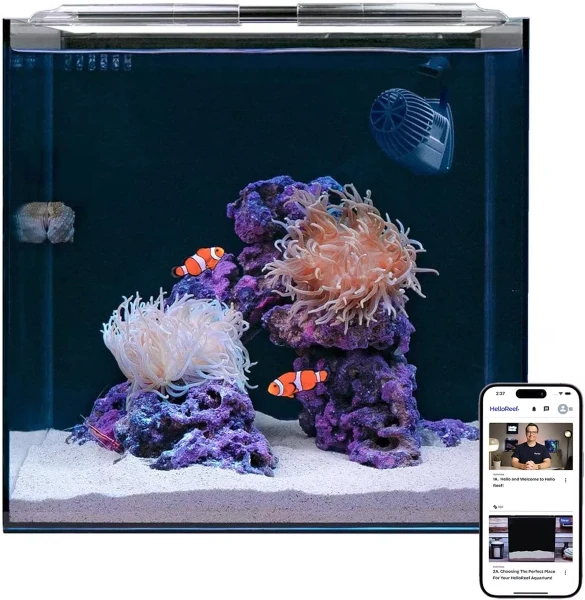
The HelloReef 15 Gallon Beginner Clownfish Saltwater Aquarium Kit is a complete rectangular desktop glass reef setup. It is constructed from high-clarity glass with an integrated rear filtration compartment. It features a 15-gallon total capacity. The package includes an app-controlled smart marine LED light fixture, a hidden multi-stage filtration system, a return pump, a wavemaker powerhead, ceramic bio-media, activated carbon, a water heater, CaribSea LifeRock, CaribSea Live Sand, sea salt mix, fish food, and a setup guide.
With its 15-gallon volume, hidden rear sump, and dedicated marine LED lighting, this kit provides a starter foundation for reef keeping. The 15-gallon capacity offers space for soft corals, LPS frags, and a pair of Clownfish. Including live sand, reef rock, sea salt, and pumps allows immediate setup without sourcing extra start-up materials. It works best for beginner reef hobbyists housing coral polyps, marine invertebrates, and small reef fish.
Pros
Cons
LANDEN 40C 15.6-Gallon Rimless 5mm Low-Iron Glass Desktop Cube Aquarium
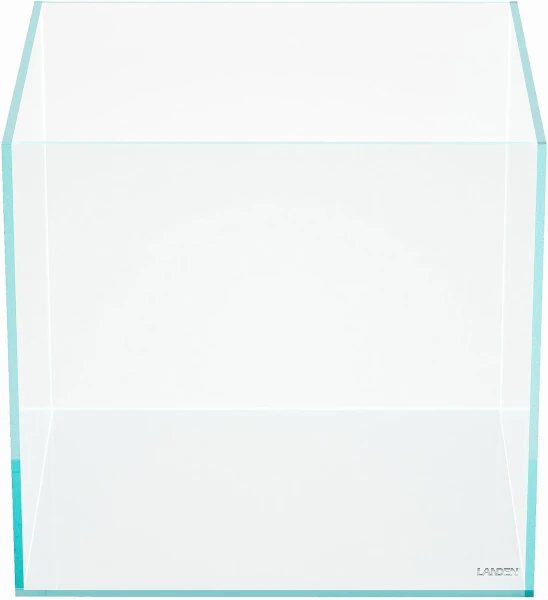
The LANDEN 40C 15.6 Gallon Ultra Clear Rimless Aquarium is a square cube desktop glass container. It is constructed from 5mm ultra-clear low-iron glass with 91 percent light transmittance and silicone joints. Its dimensions measure 15.7″L x 15.7″W x 15.7″H for a 15.6-gallon capacity. The empty glass cube weighs 25.9 pounds. It comes as a bare glass tank without a canopy cover lid, filter, marine LED light, circulation pump, or heater.
With its 15.7″ x 15.7″ x 15.7″ cube footprint, ultra-clear glass clarity, and 15.6-gallon capacity, this tank provides space for reef aquascaping. The 15.6-gallon volume suits creating a nano marine setup with live rock and corals. The open-top rimless frame allows easy installation of clip-on marine LED lights and hang-on-back filters. It works best for housing soft corals, mushroom anemones, LPS frags, and small marine invertebrates.
Pros
Cons
LANDEN EzFlux 45 20-Gallon Rimless 6mm Low-Iron Glass Desktop Aquarium
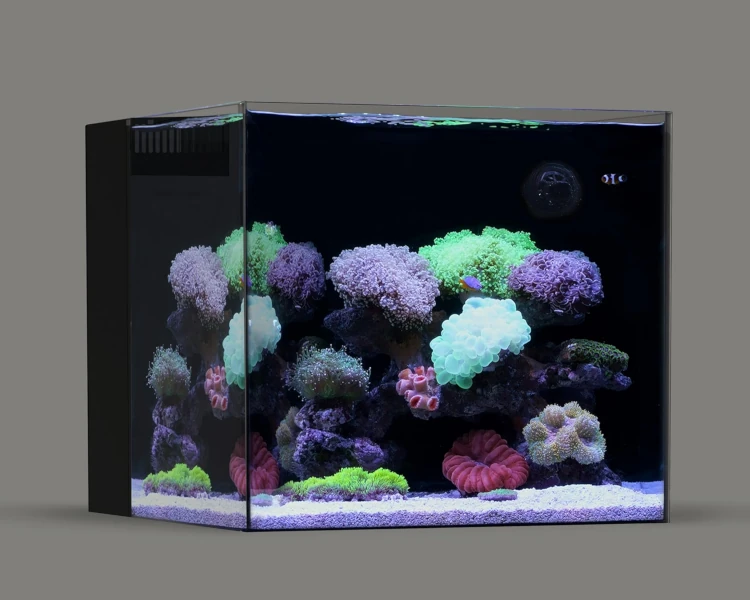
The LANDEN EzFlux 45 Rimless 20 Gallon Rear Filtration Tank is an all-in-one desktop glass aquarium system for marine and freshwater setups. It is constructed from 6mm ultra-clear low-iron glass with polished chamfered edges and leak-proof German silicone seams. Its outer dimensions measure 17.7″L x 17.7″W x 15.74″H for a total volume of 20 gallons (featuring a 14.1-gallon open display area and a built-in rear filter sump). The empty glass tank weighs 42.8 pounds. The package includes a BIOSMO 700 return pump rated at 185 GPH (700 L/H) at 9W, an adjustable directional flow nozzle, and an EVA protective base pad. It comes without a cover lid, lighting unit, filter media, or heater.
With its 20-gallon total volume, 14.1-gallon front display area, and 3-chamber rear filter sump, this rimless tank provides an ideal base for marine reef setups. The rear filtration chambers easily accommodate filter media, a heater, or a mini protein skimmer while keeping the main viewing window clutter-free. The included BIOSMO 700 pump provides reliable water turnover. It works best for housing soft corals, LPS coral frags, mushroom anemones, and a pair of small reef fish.
Pros
Cons
Aqueon 20-Gallon Long Desktop Framed Glass Aquarium
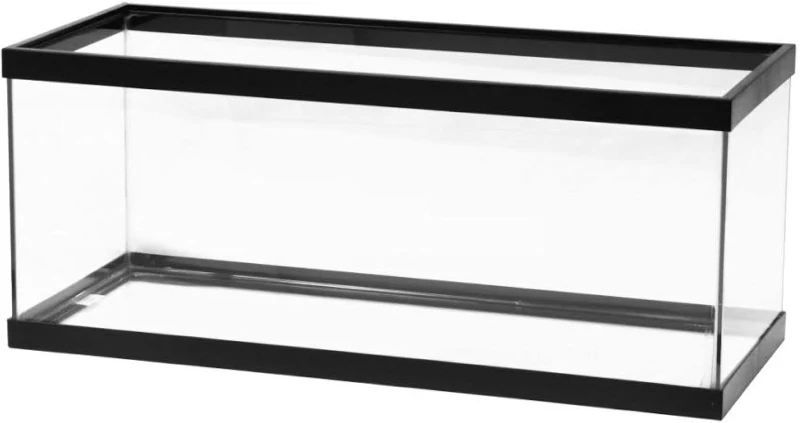
The Aqueon Glass 20 Gallon Long Tank is a long rectangular framed desktop glass aquarium container. It is constructed from thick high-quality glass with protective black edge trim and watertight silicone seams. Its dimensions measure 30.25″L x 12.5″W x 12.75″H for a 20-gallon capacity. The empty glass tank weighs 24.6 pounds. It comes as a bare framed glass container without a cover lid, filter, LED light, or heater.
With its 30.25″L horizontal layout and elongated footprint, this 20 Gallon Long framed tank provides ample surface area for marine reef aquascaping. The 20-gallon capacity provides an adequate base for arranging live rock structures, soft corals, and a pair of Clownfish. The low-profile long layout improves gas exchange and accommodates hang-on-back skimmers or wavemakers. It works best for housing soft corals, mushroom anemones, LPS frags, and small marine invertebrates.
Pros
Cons
Coralife LED BioCube 16-Gallon Curved-Glass Desktop Reef Aquarium Kit
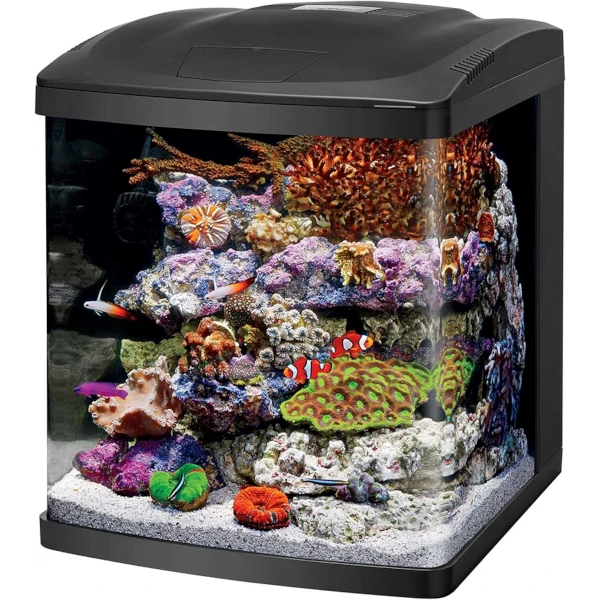
The Coralife LED BioCube 16 Gallon Aquarium Starter Kit is an all-in-one desktop glass reef tank setup. It is constructed from glass with seamless curved front corners and a black frame. Its dimensions measure 21.75″L x 20.25″W x 23.25″H for a 16-gallon capacity. The empty starter package weighs 31.7 pounds. The package includes a full canopy hood with integrated color-enhancing LEDs and a 24-hour timer, a built-in rear filter sump, a submersible return pump, an adjustable flow nozzle, a filter cartridge, a sponge filter, and a media tray. It comes without an aquarium heater.
With its 16-gallon volume, enclosed LED canopy, and integrated rear filtration chambers, this kit offers a dependable system for reef keeping. The 16-gallon capacity provides appropriate space for housing soft corals, mushroom anemones, LPS coral frags, and a pair of Clownfish. The built-in timer automatically simulates sunrise and sunset cycles to support coral growth. It works best for housing coral polyps, zoanthids, marine invertebrates, and small reef fish.
Pros
Cons
Aquatop EuroStyle Bowfront 8.7-Gallon Rimless Curved-Glass Desktop Aquarium
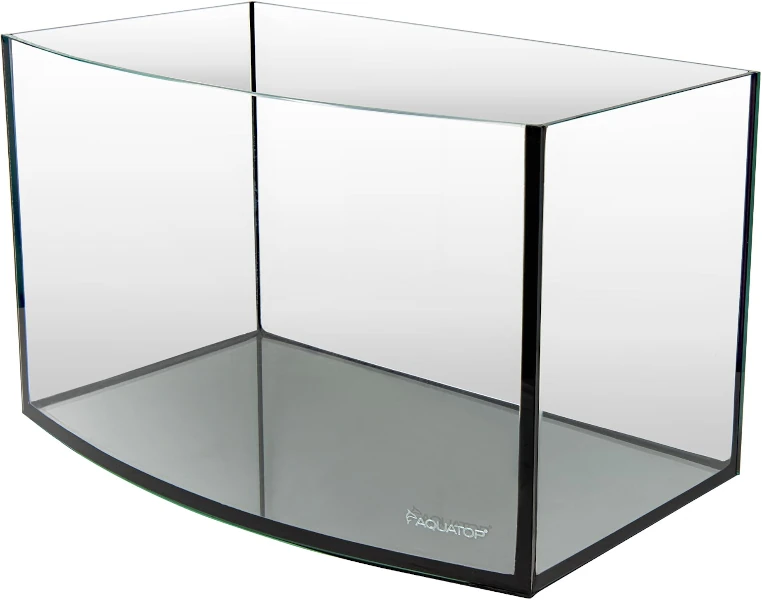
The Aquatop EuroStyle Bowfront (ES-18) is a curved rimless desktop glass aquarium container. It is constructed from durable glass with a seamless bowfront viewing pane and a flat back wall. Its outer dimensions measure 18″L x 10.75″W x 10.75″H for an 8.7-gallon capacity. The empty glass tank weighs 14 pounds. It comes as a bare glass container without a cover lid, filter, marine LED light, or heater.
With its 18″L bowfront viewing glass and 8.7-gallon volume, this tank serves as a compact vessel for marine displays. The 8.7-gallon capacity suits creating a small coral setup with live rock and soft corals. The flat back panel allows easy mounting of external hang-on-back power filters or marine LED fixtures. It works best for housing mushroom anemones, soft coral frags, marine snails, and hermit crabs.
Pros
Cons
LUXFIS 11-Gallon Rimless 6mm Low-Iron Glass Desktop Aquarium
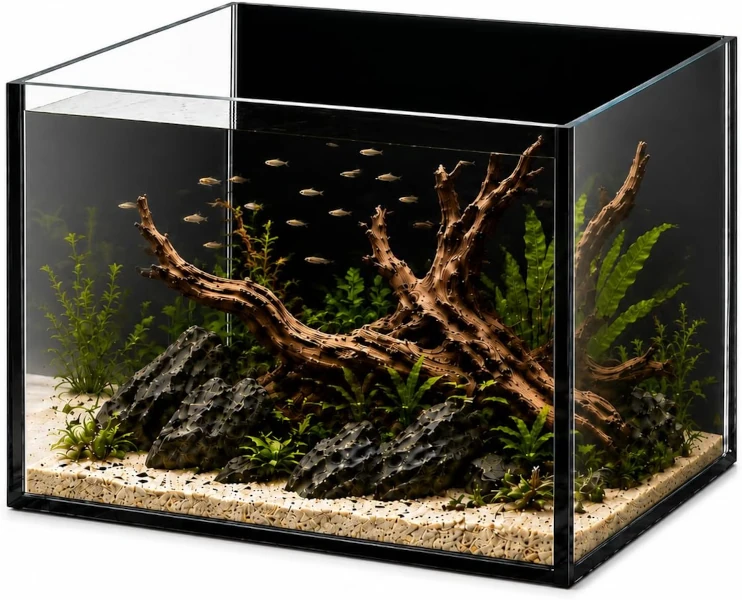
The LUXFIS Vertical Glass Fish Tank with Black Background is a rectangular rimless desktop glass aquarium container featuring a sleek black back panel. It is constructed from 6mm ultra-clear low-iron glass with over 91 percent light transmittance and German silicone joints. Its dimensions measure 15.75″L x 11.81″W x 13.78″H for an 11-gallon capacity. The empty glass tank weighs 19.51 pounds. It comes as a bare glass container without a cover lid, filter, marine LED light, or heater.
With its built-in black background, 6mm low-iron glass clarity, and 11-gallon capacity, this tank provides a high-contrast foundation for marine reef displays. The dark background makes the vibrant colors of soft corals, mushroom anemones, and zoanthids stand out dramatically. The 11-gallon volume suits setting up a compact reef layout with live rock. The rimless top allows easy mounting of clip-on marine lights and hang-on filters. It works best for housing mushroom anemones, LPS coral frags, zoanthids, and small marine invertebrates.
Pros
Cons
Aquatop High Clarity 6.5-Gallon Rimless Bookshelf Desktop Glass Aquarium
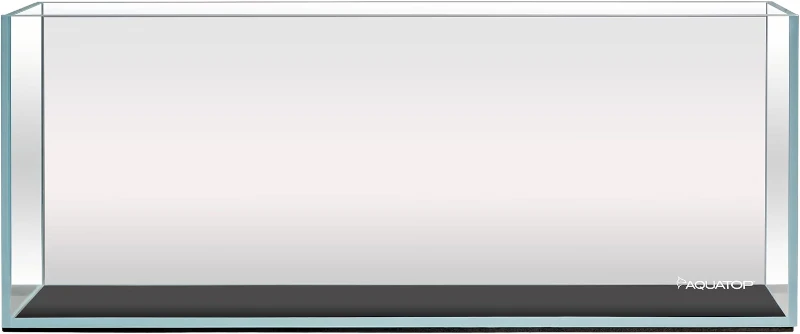
The Aquatop High Clarity Tall Glass Aquarium (HCA-6G) is a long narrow bookshelf-style rimless desktop glass tank. It is constructed from ultra-clear high-transparency glass with clean silicone seams. Its outer dimensions measure 23.6″L x 6.7″W x 9.4″H for a 6.5-gallon capacity. The package includes a protective black foam cushioning mat for the base. It comes as a bare glass container without a cover lid, filter, marine LED light, or heater.
With its elongated 23.6″L bookshelf footprint and narrow 6.7″W depth, this rimless tank offers a long visual line for marine reef displays. The 6.5-gallon capacity suits creating a low-profile reef setup with live rock. The long horizontal layout allows spacing out small soft corals and mushroom anemones along the viewing window. It works best for housing mushroom anemones, zoanthids, marine snails, and hermit crabs.
Pros
Cons
FAQ
Corals require specialized full-spectrum marine LED lighting with a strong blue actinic range. This specific spectrum drives photosynthesis in symbiotic zooxanthellae algae within coral tissues and highlights their natural fluorescent colors.
Corals are sessile organisms that rely entirely on water flow to receive oxygen and nutrients while clearing away organic wastes. Proper circulation prevents debris accumulation on coral tissues and encourages healthy polyp expansion.
Reef tanks cannot use raw tap water due to harmful dissolved minerals. Water must pass through a reverse osmosis and deionization system before mixing with specialized synthetic sea salt mix to reach a salinity of 1.024 to 1.026 SG.
A rear sump is a hidden multi-chamber compartment integrated behind the back wall of the tank. It conceals equipment like circulation pumps, heaters, bio-media, and protein skimmers to keep the main display free of clutter.
After completing the initial nitrogen cycle, introduce a clean-up crew of marine snails and hermit crabs first. Once parameters remain stable, add hardy soft corals, mushroom anemones, zoanthids, and resilient fish species like Clownfish.