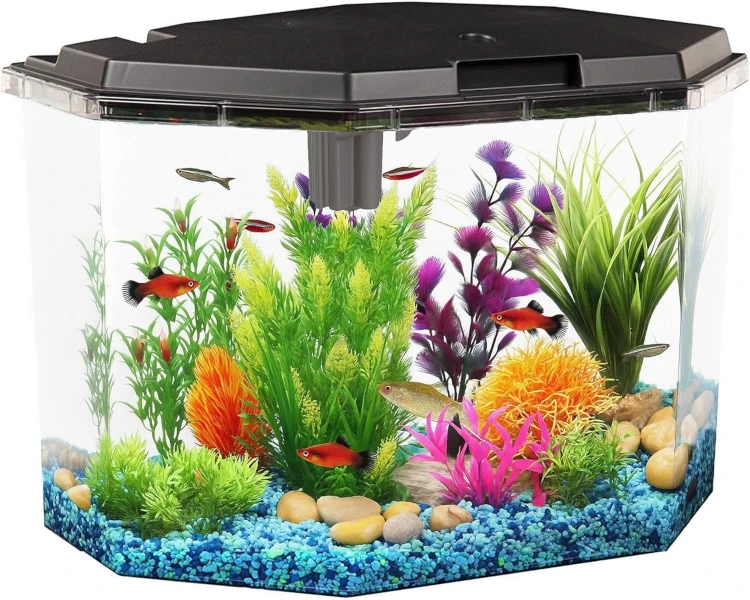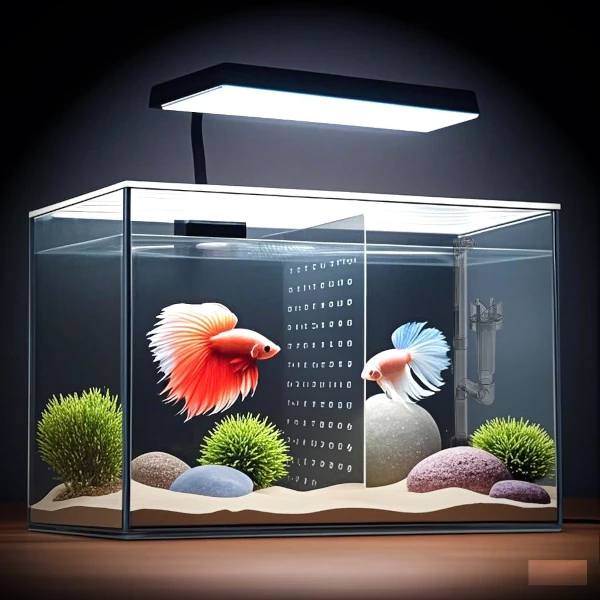
Top 3 Corner Fish Tanks for Small Spaces
Corner and triangular aquariums use corner space efficiently. They have two rear walls meeting at a 90 degree angle. This design fits seamlessly into any room corner.
- Geometry Options and Front Panel.
- Flat Glass: The front panel is a flat sheet of glass. It provides a direct line of sight. It does not distort aquatic life.
- Curved or Panoramic Glass (Bow-Front / Quarter-Cylinder): The front panel forms an arc or quarter-cylinder shape. It adds visual depth to the aquarium.
- Multi-Faceted Glass (Pentagon / Hexagon): The front section has several flat panels. These panels join together cleanly.
- Maintenance and Equipment Placement.
- Surface Cleaning: Standard magnetic scrapers clean flat front panels well. Curved glass requires flexible sponges or special attachments.
- Concealing Equipment: The $90^\circ$ rear corner holds internal equipment. Heaters and filter tubes fit here easily. Rocks, driftwood, or tall plants hide them completely.
- Water Circulation and Livestock Selection.
- Flow Management: Weak circulation zones can form in the rear corner. Point the filter outlet along the back walls. This ensures uniform filtration.
- Aquascaping and Fish: The aquarium widens toward the front glass. This layout allows for multi-tiered aquascaping. It works well for vertical or schooling fish like angelfish, discus, tetras, neons, and guppies.
Skywin 1.71-Gallon Seamless Acrylic Corner Desktop Tank
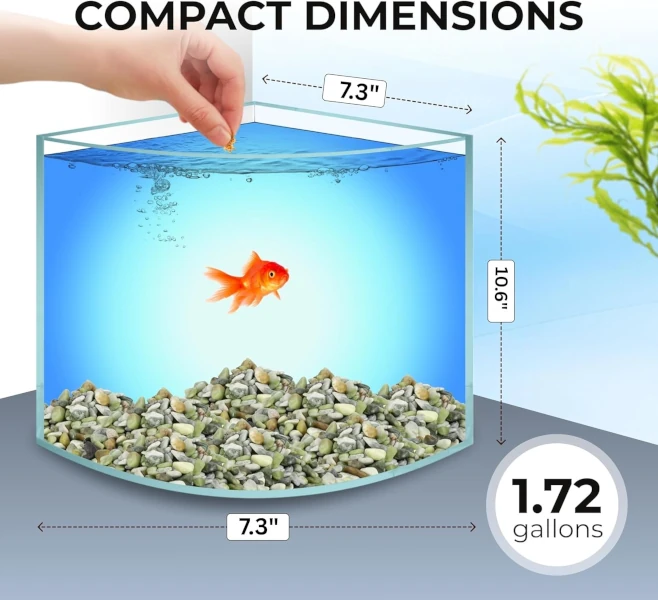
The Skywin Corner Acrylic Fish Tank 1.71 Gallon is a compact corner desktop aquarium. It is crafted from premium, seamless, high-clarity clear acrylic. Its dimensions measure 7.3″L x 7.3″W x 10.6″H (1.71-gallon / 6.5-liter capacity). The tank weighs 3.09 pounds and features a space-saving corner profile. It comes as a bare acrylic tank with no included filter, heater, or LED lighting accessories.
With its space-saving triangular corner shape, this tank fits neatly into unused desk corners, counter edges, or bookshelves. It works well for live aquatic plant aquascaping, dwarf shrimp colonies, or aquatic snails. With a separate filter and heater added, it can also function as a temporary quarantine tank for a single Betta fish.
Pros
Cons
GloFish Crescent 5-Gallon Acrylic Curved Front Aquarium Kit
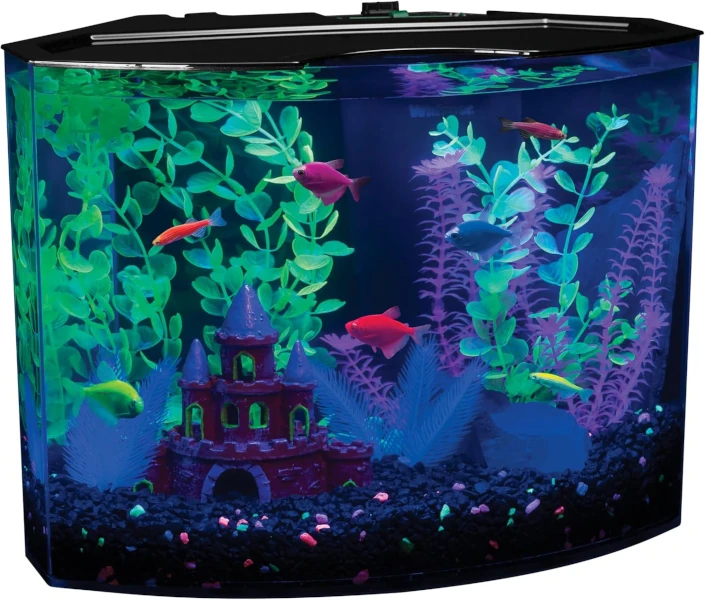
The GloFish Crescent Aquarium Kit 5 Gallons is a curved desktop aquarium kit with a semicircular crescent profile. It is constructed from lightweight, seamless clear acrylic. Its dimensions measure 16.5″L x 11.25″W x 16.5″H (5-gallon capacity). The bundle includes a sleek black hood to reduce evaporation, energy-efficient blue LED lighting, and an internal Tetra Whisper MicroFilter with replaceable cartridges.
With its specialized blue LED light system, this aquarium highlights the neon glow of GloFish fluorescent species. The 5-gallon volume and built-in filter provide a healthy environment for a single Betta fish, small GloFish tetras, danios, or dwarf shrimp.
Pros
Cons
Koller Products 6.5-Gallon Seamless Plastic Corner/Panoramic Aquarium Kit
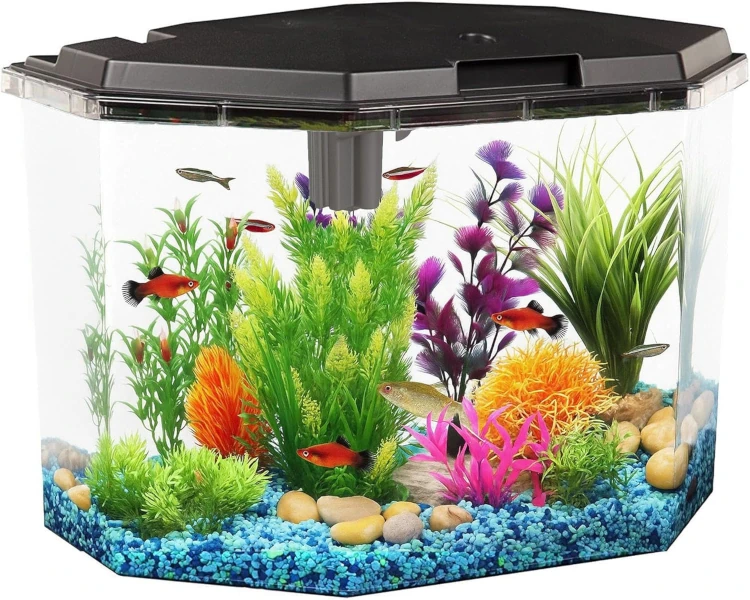
The Koller Products 6.5-Gallon Aquarium Kit (AP650) is a spacious desktop aquarium kit with a curved panoramic profile suitable for corner or flat setups. It is constructed from a single piece of impact-resistant clear plastic. Its dimensions measure 18″L x 11″W x 13.5″H (6.5-gallon / 24.6-liter capacity). The seamless molded design completely eliminates silicone leak risks and glass breakage. The kit includes energy-efficient LED lighting with four color choices (daylight white, warm white, blue, and blue-white) and an internal power filter rated at 45 gallons per hour (uses Small AQ10FC-60 cartridges).
With its 6.5-gallon capacity and built-in filtration, this tank comfortably accommodates a single Betta fish, small schools of tetras, guppies, or dwarf shrimp. It makes a stylish addition to desk corners, countertops, or side tables.
Pros
Cons
FAQ
Corner tanks allow efficient use of empty space in desk corners or room edges. Curved and panoramic front panels provide an uninterrupted viewing angle without corner seams.
Yes, these tanks work very well for housing Betta fish. Models ranging from 3 to 6.5 gallons equipped with filtration and heaters provide the best permanent habitat.
Most of these models feature single-piece molded construction without silicone glue lines. This eliminates leak risks entirely and makes the structure shatter-resistant.
Acrylic and soft plastic scratch easily when wiped with stiff scrapers. You must clean the interior walls using only soft microfiber cloths or smooth foam sponges.
Single-color blue lighting is specifically designed to enhance the colors of fluorescent GloFish. Growing most species of live aquatic plants requires full-spectrum white lighting.