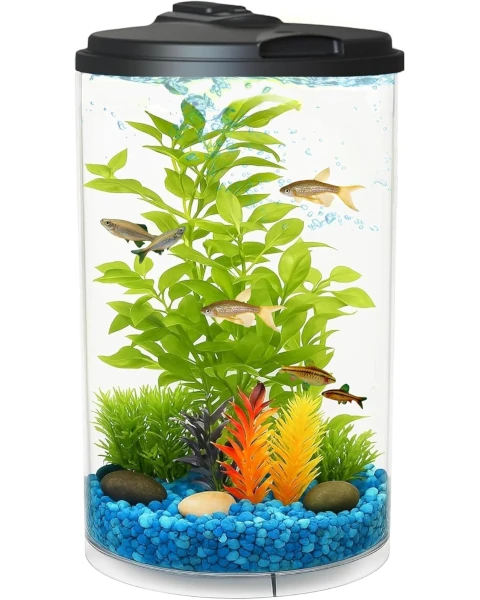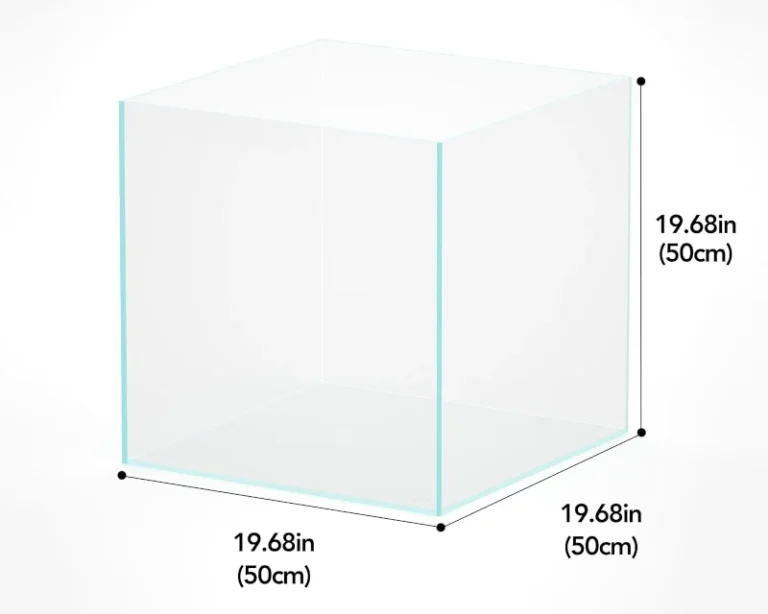
Top 10 Round Fish Tanks for Every Home and Budget
Round fish tanks have a distinct appearance. However, they have a number of specific characteristics and limitations in fishkeeping.
Key Features of a Round Fish Tank
- Small water surface area: The narrow neck reduces the contact between water and air. This complicates natural gas exchange. It slows down oxygen enrichment and the release of carbon dioxide.
- Optical distortion: The curved glass acts like a lens. It distorts the view from the outside. This creates a stressful environment for the inhabitants due to the constant refraction of light and movement.
- Equipment attachment difficulty: The tank lacks flat walls. Because of this, standard filters, heaters, or thermometers are hard to attach. Curved walls are also harder to clean from algae.
- Limited circulation: It is harder to create proper water flow in these tanks. This often causes “dead” zones or overly strong circular currents.
Who Is a Round Fish Tank Suitable For?
A round shape is not recommended for active or large fish. In particular, it is not suitable for goldfish. They require large volumes and intensive filtration.
However, a round tank can be used for the following purposes:
- Florarium or aquascape: A composition of live aquatic plants, rocks, and driftwood.
- Micro-aquarium for shrimp or snails: You can keep them provided you install aeration, a mini-filter, and maintain a stable temperature.
- Temporary tank or quarantine bowl.
Koller Products 1-Gallon Plastic Oval Drum Fish Bowl
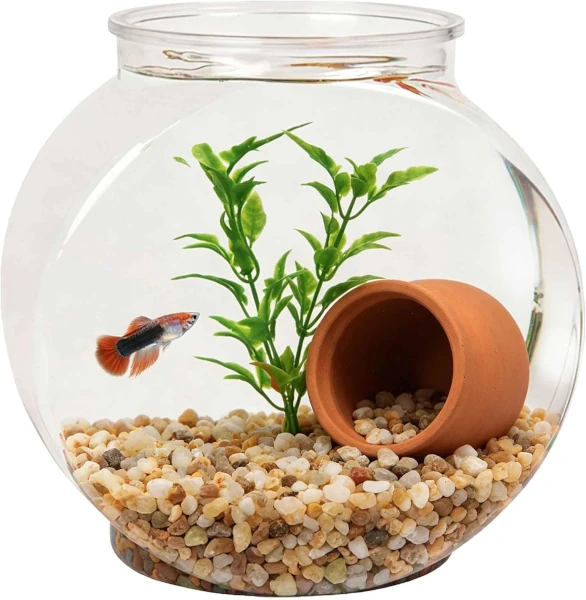
The Koller Products 1-Gallon Plastic Oval Fish Bowl is a lightweight desktop drum-style bowl. It is crafted from clear impact-resistant plastic that resists shattering. Its dimensions measure 8.5″L x 5″W x 8.5″H (1-gallon capacity). The oval drum design offers clear sightlines while weighing only 6.2 ounces. The bowl comes as a bare container without built-in filters, lights, or lids.
With its shatter-proof plastic construction, this container serves as a safe temporary habitat during primary tank maintenance. It works exceptionally well as a quarantine hospital tank, a fry separation bowl, or an educational classroom tool. It can also house a few dwarf shrimp or aquatic snails.
Pros
Cons
Pawfly 3-Gallon Plastic Round Fish Bowl & Desktop Globe Aquarium
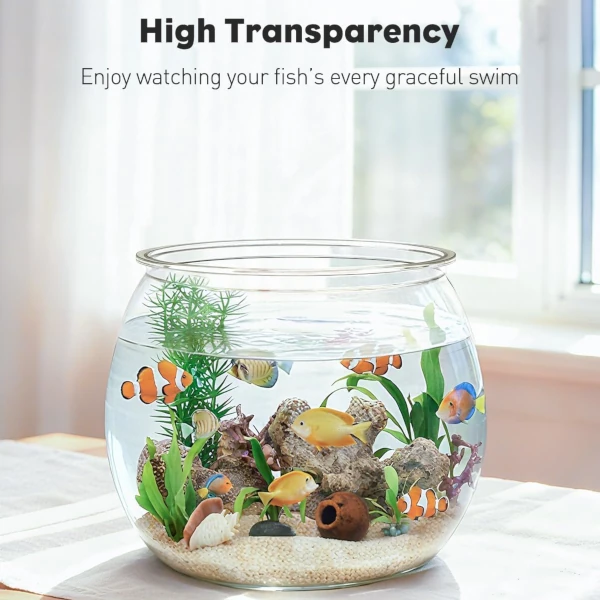
The Pawfly 3 Gallon Plastic Fish Bowl is a large spherical desktop aquarium. It is crafted from durable, BPA-free PET plastic that resists shattering. Its dimensions measure 11 inches in diameter by 9.3 inches in height. The bowl features thickened walls for added safety and an 8-inch wide flat base for rock-solid stability. The package includes a bare plastic bowl container with no built-in equipment.
With a 3-gallon capacity, this globe accommodates small fish like Bettas or guppies. Beyond aquatic use, it functions nicely as a decorative vase, a party candy jar, or a minimalist home decor display piece.
Pros
Cons
Koller Products 1-Gallon Plastic Round Fish Bowl
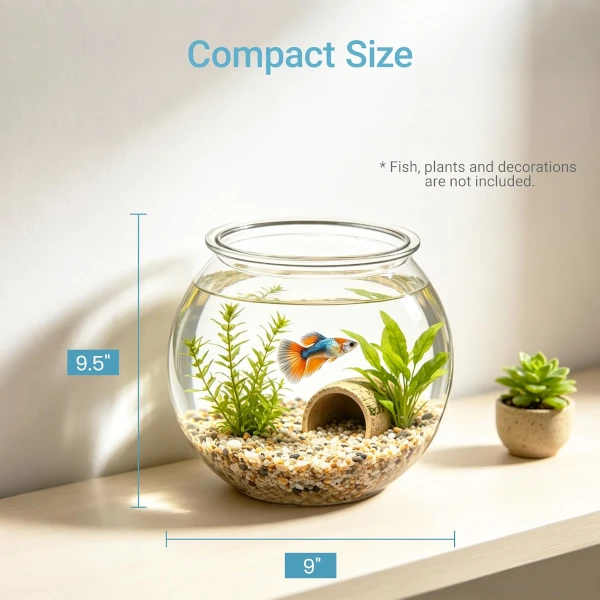
The Koller Products 1-Gallon Plastic Round Fish Bowl is a lightweight spherical desktop aquarium. It is crafted from one-piece impact-resistant clear plastic that resists leaks and breaks. Its dimensions measure 9.5 inches in diameter by 9 inches in height (1-gallon capacity). The bowl features seamless construction without silicone joints and weighs 12.8 ounces. It comes as a basic plastic container with no built-in equipment.
Thanks to its seamless and break-resistant build, this bowl serves as a safe temporary habitat during primary tank cleanings. It works well as a fry isolation tank, a hospital quarantine space, desktop decoration, or a classroom learning tool. It can also host a few dwarf shrimp or snails.
Pros
Cons
Geelin 7-Gallon Large Plastic Round Fish Bowl & Terrarium
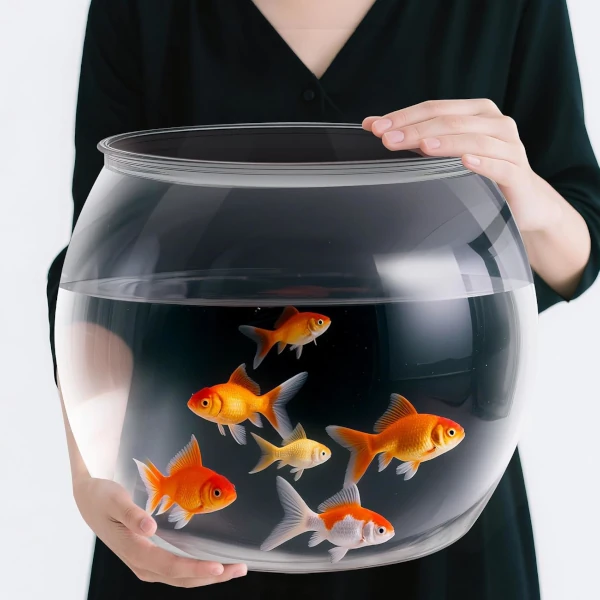
The Geelin 7 Gallon Plastic Fish Bowl is a large spherical desktop container. It is crafted from durable, crystal-clear PET plastic that resists shattering. Its dimensions measure 15.35″L x 15.35″W x 12.99″H (7-gallon capacity). Weighing only 1.95 pounds, the lightweight globe offers a wide panoramic view. The package includes the bare plastic bowl container with no built-in equipment.
With its generous 7-gallon volume, this bowl accommodates small aquatic fish communities, plant terrariums, or succulent displays. It functions well as a creative platform for aquascaping and serves as an eye-catching decorative centerpiece in homes, offices, or events.
Pros
Cons
biOrb Classic 15 Acrylic 4-Gallon Aquarium with White LED Light & Silver Trim
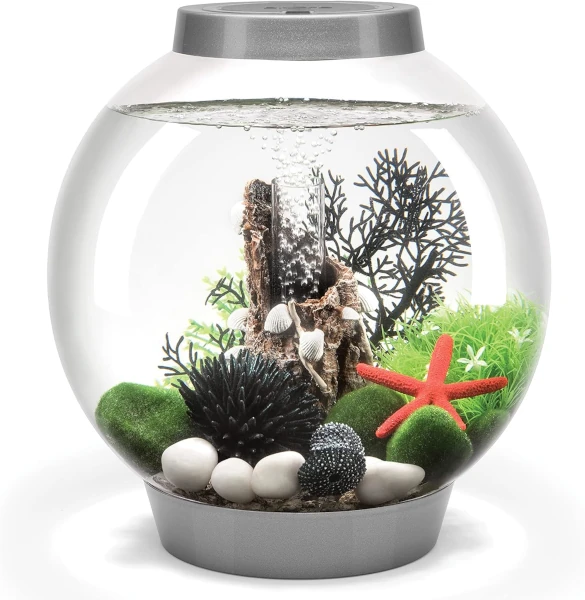
The biOrb Classic 15 Acrylic 4-Gallon Aquarium is a stylish spherical desktop tank with silver accent trim. It is crafted from acrylic that is 10 times stronger, 50% lighter, and 23% clearer than ordinary glass. Its dimensions measure 11.75″L x 11.75″W x 12.5″H (4-gallon capacity). The complete kit features a patented 5-stage bottom filter system with ceramic media, a quiet air pump, an air stone, starter water treatments, and long-lasting white LED lighting. It comes with a 2-year warranty.
With its sleek 360-degree round design, this tank acts as an attractive accent piece on desks, side tables, or counter spaces. The 4-gallon volume creates a stable habitat for a single Betta fish. It is also suitable for small guppies or dwarf shrimp and snails.
Pros
Cons
DaToo 1-Gallon Plastic Round Fish Bowl Kit with USB Filtration & Full-Spectrum LED Light
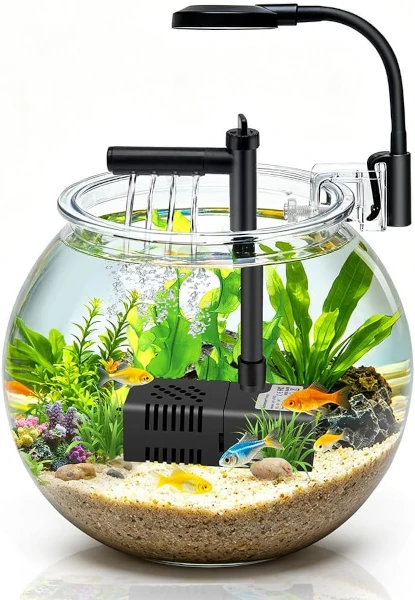
The DaToo 1 Gallon Mini Fish Bowl Kit is a compact spherical desktop aquarium. It is crafted from thick, crystal-clear, shatterproof PET plastic that is completely BPA-free. Its dimensions measure 8.27″L x 8.27″W x 7″H (1-gallon / 4-liter capacity). The bowl features a 5.5-inch wide anti-tip base for high stability. The complete bundle includes a submersible USB filter pump (DC 5V/2W) with adjustable flow rates (rain shower and waterfall modes) and a full-spectrum LED light unit (17 white, 1 green, 1 red, and 1 blue LED) running at 11500K.
With its small footprint, this fish bowl fits easily on office desks, countertops, or nightstands. The included filter and light make it a practical home for a single Betta fish, dwarf shrimp, or aquatic snails. It also functions well as a temporary quarantine tank, a fry holding space, or a plant container.
Pros
Cons
Plus tard 1-Gallon Plastic Round Fish Bowl Set with Plants and Stones
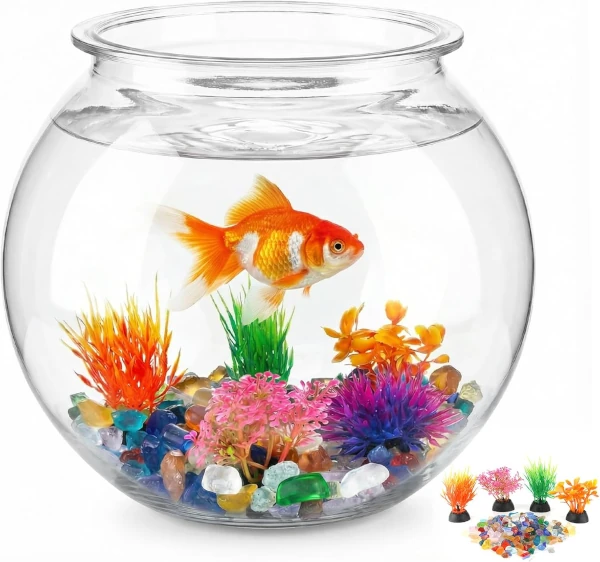
The Plus tard 1 Gallon Clear Plastic Fish Bowl Set is a compact spherical desktop aquarium. It is crafted from lightweight, crystal-clear, break-resistant plastic. Its dimensions measure 6.5″L x 6.5″W x 7″H (1-gallon capacity). The bowl features smooth walls for effortless cleaning and maintenance. The all-in-one starter kit comes ready to use, including the plastic bowl, five artificial aquarium plants, and 8.8 ounces of colorful bottom stones.
With its compact footprint and pre-packaged decor, this bowl serves as an easy entry-level display for beginners or office desks. The rounded shape enhances viewing angles for decorative setups. It works well for housing dwarf shrimp, snails, or serving as a floral centerpiece vase for events.
Pros
Cons
SUPVOX 0.7-Gallon Plastic Round Desktop Fish Bowl & Hydroponic Planter
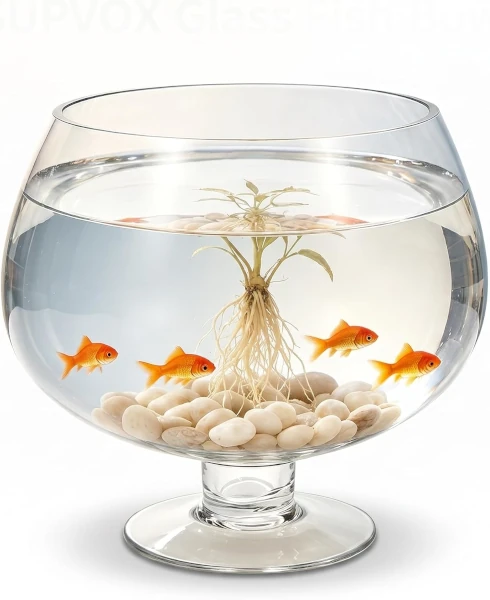
The SUPVOX 6.7 Inch Round Fish Bowl is an ultra-compact spherical desktop container. Despite the listing title, it is crafted from lightweight clear PET plastic rather than glass. Its dimensions measure 6.69″L x 6.69″W x 6.69″H (roughly 0.7-gallon / 2.7-liter capacity). The bowl weighs just 1.3 pounds. It comes as a bare plastic bowl container with no built-in electrical accessories.
Due to its tiny footprint, this bowl fits on small office desks, crowded bookshelves, or windowsills. It works best as a hydroponic plant vase, a succulent planter, or a decorative tabletop display. Because of its tiny volume (under 1 gallon), it cannot house fish permanently and should only host small aquatic snails or dwarf shrimp.
Pros
Cons
iplusmile 1-Gallon Plastic Round Fish Bowl & Decorative Vase
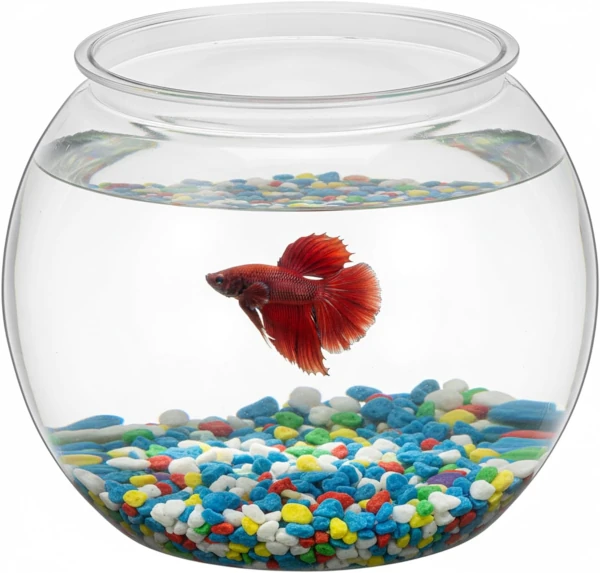
The iplusmile 1 Gallon Plastic Fish Bowl is a lightweight spherical desktop container. It is crafted from durable, clear PET plastic that resists shattering. Its dimensions measure 7.02″L x 7.02″W x 7.02″H (1-gallon capacity). The bowl features a wide top opening for easy interior access and weighs only 6.5 ounces. It comes as a basic plastic container without built-in filtration or electrical parts.
With its shatterproof plastic design, this container is safe for children’s bedrooms and classroom projects. It works well as a temporary fish hold, a habitat for dwarf shrimp and snails, or a base for moss terrariums. Additionally, people use it as a decorative floral vase, a party drink bowl, or a candy display jar.
Pros
Cons
balacoo 1.3-Gallon Plastic Round Desktop Fish Bowl & Terrarium
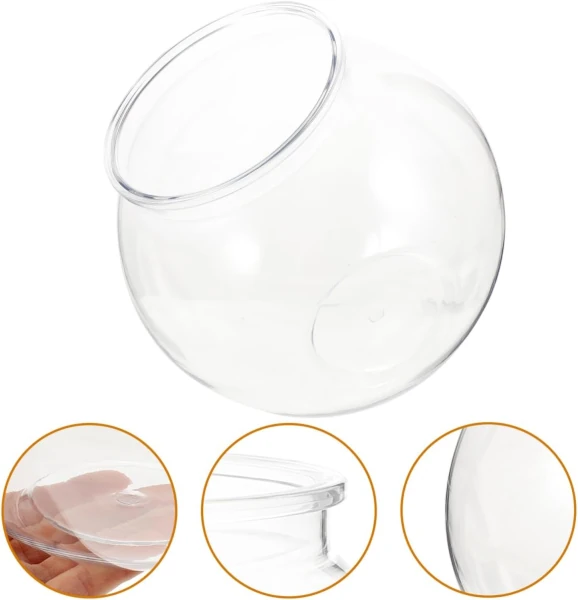
The balacoo Plastic Round Small Fish Tank is a compact spherical desktop container. It is crafted from durable, clear, and lightweight plastic that resists breaking. Its dimensions measure 7.09″L x 7.09″W x 6.3″H (roughly 1.37-gallon / 5.18-liter volume). The bowl weighs only 9.8 ounces and comes as a bare plastic container without built-in electrical accessories.
Its space-saving size allows easy placement on office desks, bookshelves, or side tables. It works well for housing dwarf shrimp, aquatic snails, live water plants, or mosses. Additionally, it serves as a temporary habitat for small hermit crabs or a tabletop plant container.
Pros
Cons
FAQ
Most round bowls have small volumes (0.7 to 3 gallons) and lack filters. They work best for housing snails, dwarf shrimp, or as temporary holding containers during main tank cleaning. Larger 4 to 7-gallon acrylic bowls with filtration can host a single Betta fish permanently.
Goldfish produce heavy waste loads and grow to very large sizes. Small 1 to 3-gallon bowls cannot provide enough swimming room or oxygenation. Goldfish require much larger rectangular tanks equipped with high-capacity filtration systems.
Glass bowls are heavier but resist scratching during cleaning. PET plastic bowls are lightweight, inexpensive, and shatterproof, making them safe around children. Acrylic bowls offer crystal-clear optics, impact strength, and superior water heat retention.
Plastic and acrylic are soft materials that scratch easily with rough sponges. You must clean interior walls using only soft microfiber cloths or smooth foam pads. Never use soap, detergents, or abrasive chemicals.
Unfiltered fish bowls collect waste products and uneaten food rapidly. You must perform 30% to 50% water changes every 2 to 3 days. Always treat tap water with a water conditioner during every refill to neutralize harmful chlorine.