Top 5 Jellyfish Tanks Worth Buying
A specialized jellyfish aquarium is very different from a regular one. Jellyfish consist almost entirely of water. They do not have bones. Jellyfish are poor swimmers. A regular aquarium is lethally dangerous for them. The best jellyfish aquariums have five important features:
- Laminar circular flow. The aquarium creates a soft circular water current. This current keeps jellyfish in the center. Without a current, jellyfish will fall to the bottom and die.
- No sharp corners. The inner bowl has a round or oval shape. A jellyfish easily gets stuck in corners. It can severely injure its body.
- Protected filtration system. Intake openings are covered with a special micro-mesh. Water is sucked in very softly. The filter cannot pull a jellyfish inside.
- No air bubbles. Air bubbles harm jellyfish. They pierce the animal’s delicate bell. Air forces a jellyfish to float to the surface. Water is oxygenated in a hidden chamber.
- Special lighting. Jellyfish are almost transparent. LEDs illuminate the aquarium from the side or back. The body of the jellyfish refracts the light nicely. It begins to glow brightly in various colors.
Maxdot 2.5-Gallon Cylindrical Desktop Glass Aquarium
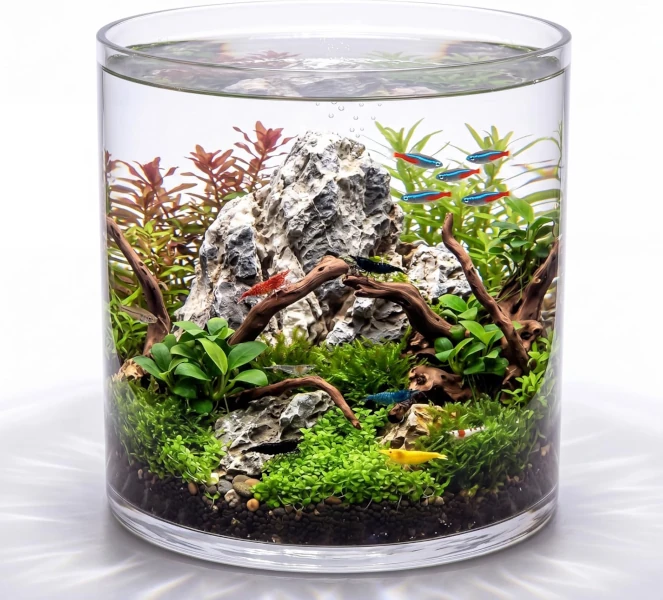
The Maxdot 2.5 Gallon Cylindrical Glass Fish Tank is a round desktop glass aquarium container. It is constructed from ultra-clear uniform glass with a reinforced glass base. Its dimensions measure 10.24″L x 10.24″W x 10.24″H for a 2.5-gallon capacity. The empty glass bowl weighs 5.19 pounds. It comes as a bare glass container without a cover lid, filter, LED light, or heater.
With its 360-degree round layout and 2.5-gallon capacity, this cylindrical glass setup provides a clean desktop view. However, Jellyfish require specialized kreisel tanks with gentle laminar water flow to keep them suspended without getting trapped at the bottom. Using this tank for Jellyfish demands installing specialized flow spray bars. It works best for housing small aquatic snails, microfauna, or indoor aquatic plants.
Pros
Cons
Koller Products 3-Gallon 360-Degree Desktop Aquarium Kit
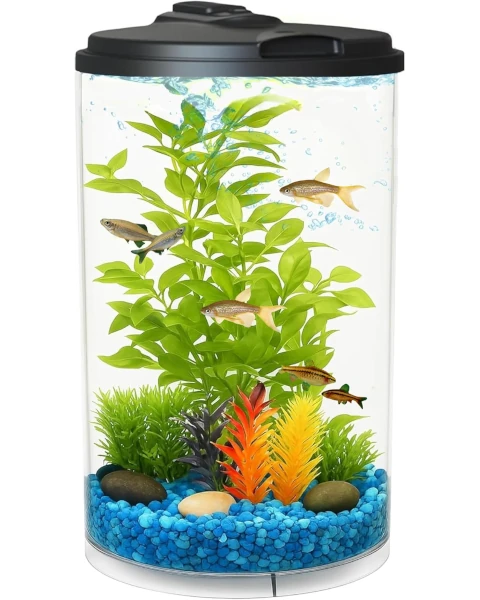
The Koller Products 3-Gallon 360 Aquarium Kit is a cylindrical desktop aquarium setup. It is constructed from seamless impact-resistant plastic with clear visibility. Its dimensions measure 9.5″L x 9.5″W x 13″H for a 3-gallon capacity. The empty plastic container weighs only 2.5 pounds. The package includes an internal power filter rated at 25 gallons per hour and a 7-color LED light system (daylight white, blue, green, amber, aqua, purple, red). It comes without a specialized laminar flow kit.
With its round cylindrical design and 3-gallon volume, this plastic setup offers a clear container for viewing. However, Jellyfish require specialized gentle circular water currents and guarded filter intakes to keep their delicate bodies suspended safely. Using this tank for Jellyfish requires installing a flow diffuser and a soft filter guard screen. It works strictly as a base structure for custom Jellyfish modifications.
Pros
Cons
Pawfly 3-Gallon Shatterproof Round PET Plastic Desktop Globe Aquarium
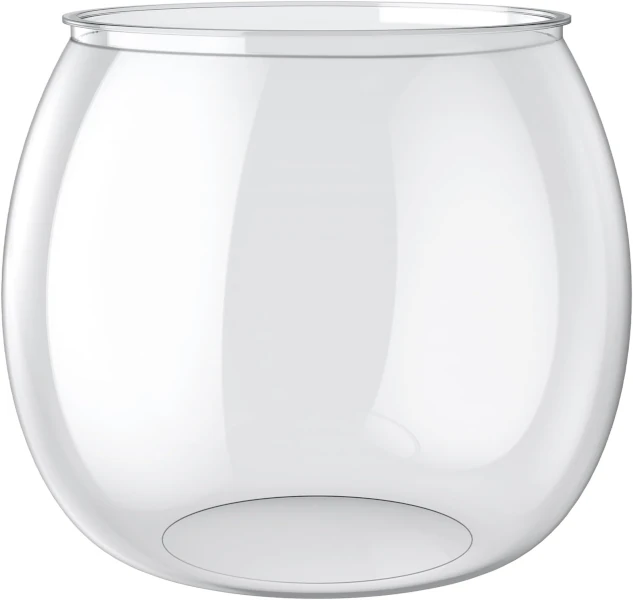
The Pawfly 3 Gallon Clear Round Plastic Fish Bowl is a spherical desktop plastic aquarium bowl. It is constructed from thick shatterproof BPA-free PET plastic with a wide 8-inch flat bottom base. Its dimensions measure 11″L x 11″W x 9.3″H for a 3-gallon capacity. The empty plastic container weighs only 1.75 pounds. It comes as a bare plastic bowl without a cover lid, filter, LED light, or flow diffuser.
With its spherical clear shape and 3-gallon capacity, this plastic globe offers a lightweight container. However, Jellyfish require specialized kreisel setups with continuous laminar water flow to keep their delicate bodies suspended without settling at the bottom. Using this bowl for Jellyfish requires installing a custom circular flow diffuser. It works strictly as a DIY base structure for custom Jellyfish modifications.
Pros
Cons
LAQUAL 1-Gallon Desktop Glass Bowl Aquarium
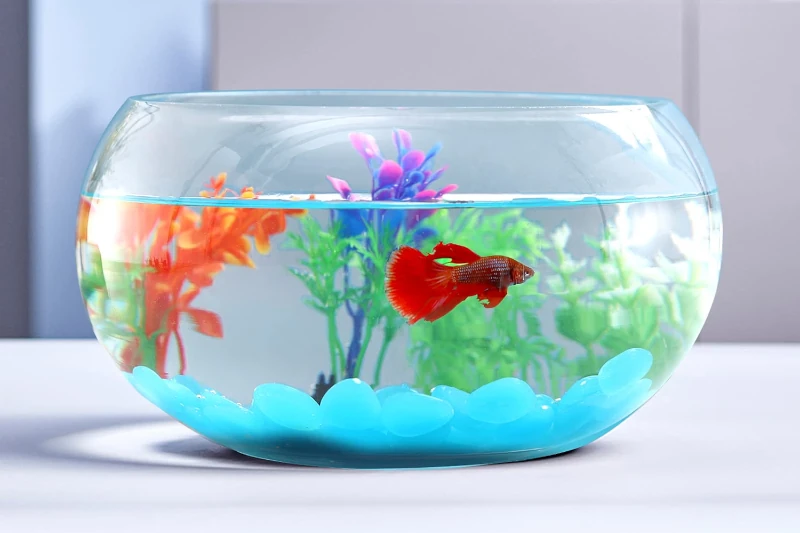
The LAQUAL 1 Gallon Glass Fish Bowl Set is a spherical desktop glass bowl container. It is handcrafted from high-white clear glass with smooth polished edges. Its dimensions measure 9″L x 9″W x 4.7″H for a 1-gallon capacity. The empty glass bowl weighs 2.14 pounds. The package includes 50 pieces of fluorescent glow stones, 4 artificial decorative plants, and a small mesh fish net. It comes without a cover lid, filter, LED light, or flow diffuser.
With its compact 1-gallon capacity and clear glass structure, this bowl offers a basic decorative centerpiece. However, Jellyfish require specialized kreisel setups with continuous laminar water flow to keep their delicate bodies suspended without settling at the bottom. Using this bowl for Jellyfish requires installing a custom circular flow diffuser. It works strictly as a base structure for custom Jellyfish modifications.
Pros
Cons
biOrb Classic 30 Acrylic 8-Gallon Desktop Globe Aquarium Kit
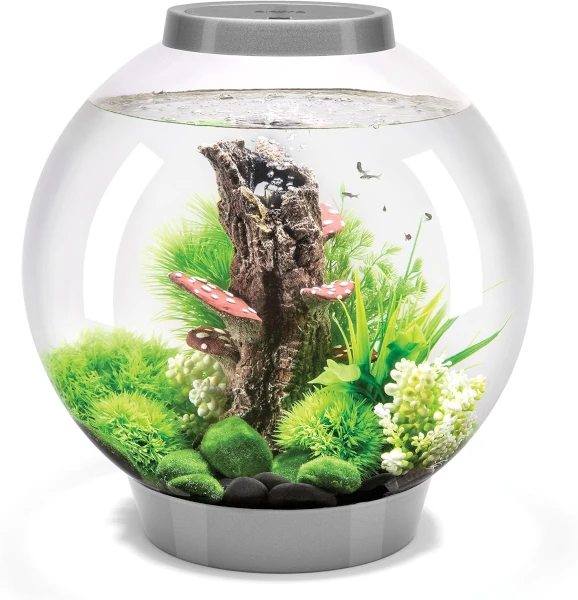
The biOrb Classic 30 Acrylic 8-Gallon Aquarium Kit is a spherical acrylic desktop aquarium setup. It is constructed from ultra-clear lightweight acrylic that is 10 times stronger and 50 percent lighter than ordinary glass. Its dimensions measure 16.22″L x 16.22″W x 16.22″H for an 8-gallon capacity. The empty acrylic kit weighs 7.96 pounds. The package includes a standard white LED lighting unit, a patented bottom 5-stage filtration system with ceramic media, a quiet air pump, an air stone, and a 12V transformer. It comes without an aquarium heater or laminar flow kit.
With its 360-degree acrylic globe and 8-gallon volume, this round setup offers clear visibility. However, Jellyfish require specialized kreisel systems with continuous gentle laminar water flow to keep their delicate bodies suspended without hitting bottom ceramic media. Using this tank for Jellyfish requires adding a top circular flow diffuser and a smooth guard screen over the bottom drain. It works strictly as a base unit for custom Jellyfish modifications.
Pros
Cons
FAQ
Jellyfish are weak swimmers with delicate bodies made mostly of water. In standard aquariums, they sink to the bottom, get trapped in sharp corners, or injure their bell tissues. Specialized Jellyfish tanks produce a gentle circular water current that keeps them continuously suspended in the water column.
The filtration system must have completely guarded intake vents. Standard pump intakes with high suction can pull in and damage soft Jellyfish bodies. Safe setups use fine mesh guards or wide intake slots to distribute water movement softly and evenly.
Standard round or cylindrical containers offer a good foundation because they lack sharp corners, but they require modification. Safely housing Jellyfish in these tanks requires adding a circular flow diffuser and a soft filter intake guard screen.
Color-changing LED lighting is ideal for Jellyfish setups. Because Jellyfish have translucent bodies, multi-color LED lights highlight their shapes and create a visual display in darkened rooms.
The tissue of a Jellyfish is soft and tears easily upon physical contact. Artificial plants, rough gravel, and sharp ceramic media can damage the bell of a Jellyfish, so internal surfaces must remain smooth or protected by soft guard screens.