Top 10 Shrimp Tank Setup Ideas for a Thriving Aquatic Ecosystem
The ideal shrimp tank differs significantly from a regular fish tank. Since shrimp are very sensitive to water quality and less protected than most fish, the “best” shrimp tank is created taking several key points into account:
- Safe Filtration (Airtight or Sponge): Traditional powerful filters suck up newborn shrimp. The best solution is an airlift (sponge) filter or a filter with a fine protective mesh on the intake tube.
- Dense Vegetation and Mosses: Mosses (such as Java Moss or Christmas Moss) create an ideal environment: they grow biofilm (microorganisms and algae), which is the primary food source for baby shrimp.
- Driftwood and Leaves (Tannins): Adding driftwood and dried leaves (such as almond or oak) enriches the water with humic acids, inhibits pathogenic bacteria, and helps shrimp during molting.
- Special Substrate (Soil): For demanding species (such as Caridina / Crystal Red), nutrient-rich soil is used to stabilize water parameters (lower pH and hardness). For simple species (Neocaridina / Cherry), neutral fine gravel is suitable.
- Stability, Not Volume: Although shrimp do not need giant reservoirs, the most important thing is stable water parameters without sudden fluctuations in temperature and the nitrogen cycle.
Cirrsondy 10.3-Gallon Rimless Low-Iron Desktop Glass Aquarium
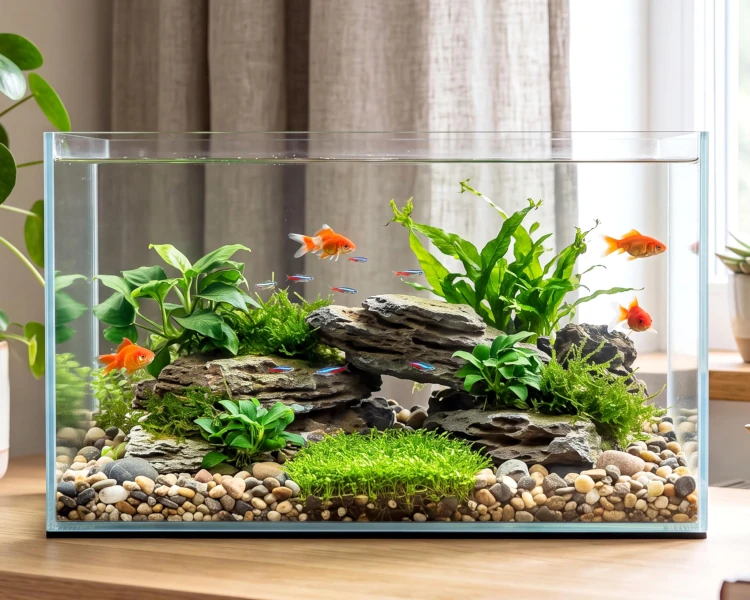
The Cirrsondy 10 Gallon Ultra Clear Glass Fish Tank is a rectangular rimless desktop glass aquarium container. It is constructed from ultra-clear low-iron glass featuring a 93% light transmittance rate and smooth burr-free polished edges. It features a 10.3-gallon capacity. The bare glass container weighs 18.21 pounds. The package includes a soft non-slip base cushioning mat to disperse bottom weight evenly. It comes as a bare tank without a lid, filtration system, LED light, or heater.
With its high clarity glass, 10.3-gallon volume, and smooth polished edges, this tank serves as a solid home for dwarf shrimp breeding setups. The 10.3-gallon capacity maintains stable water parameters for sensitive shrimp species. It works best for housing and breeding colonies of Neocaridina or Caridina shrimp, aquatic snails, and tiny nano fish.
Pros
Cons
Wonderfactory 10-Gallon High-Clarity Desktop Glass Aquarium Starter Kit
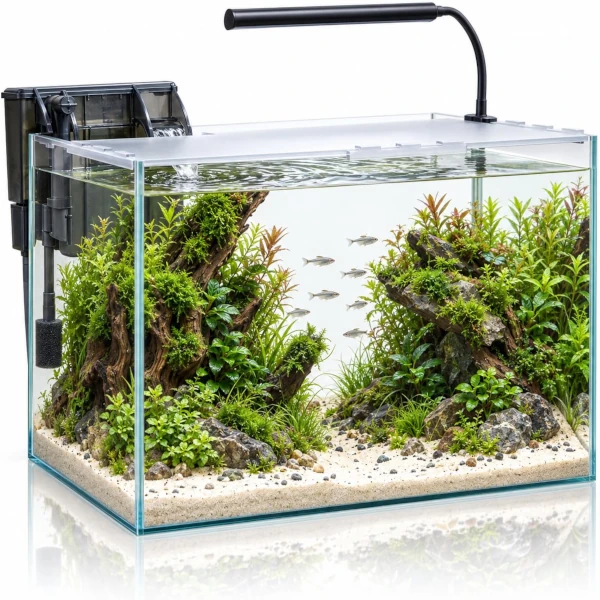
The Wonderfactory 10 Gallon Glass Fish Tank Starter Kit is a rectangular desktop glass aquarium kit. It is constructed from ultra-clear high-clarity glass. Its dimensions measure 9.7″L x 12.4″W x 19.5″H for a 10-gallon capacity. The empty starter package weighs 21.6 pounds. The package includes a transparent open-back acrylic lid cover, an adjustable flow internal filter loaded with a 25 PPI sponge pad and ceramic bio-media, a white LED light fixture, and a protective bottom sponge mat. It comes without an aquarium heater.
With its adjustable flow filter, 25 PPI sponge media, and 10-gallon volume, this kit provides a safe container for dwarf shrimp keeping. The flow control feature lets owners reduce water current for delicate invertebrates. It works best for housing and breeding colonies of Neocaridina or Caridina shrimp, aquatic snails, Betta fish, and small nano species.
Pros
Cons
Vimvins 10-Gallon Rimless Desktop Glass Aquarium
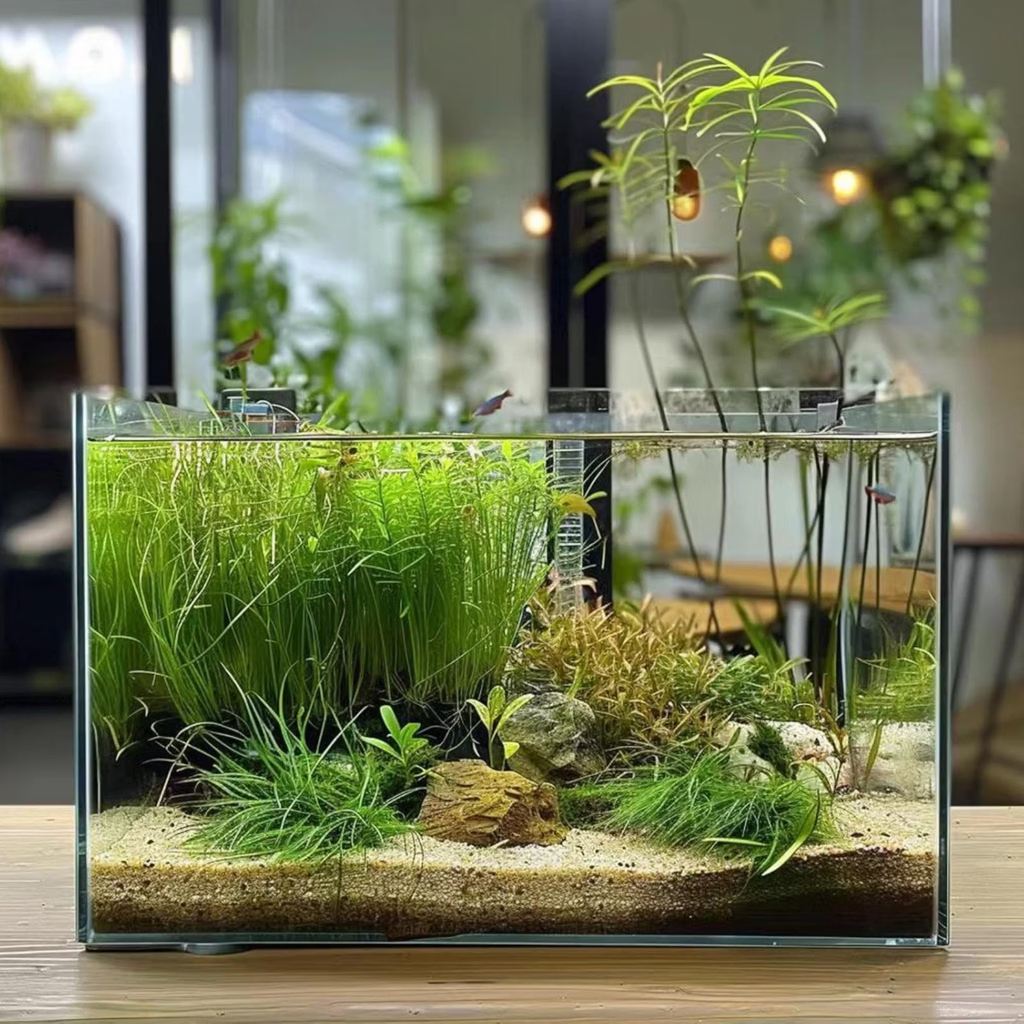
The Vimvins 10 Gallon Rimless Glass Fish Tank is a rectangular rimless desktop glass aquarium container. It is constructed from ultra-clear glass without surrounding top or bottom frames. Its dimensions measure 19.68″L x 10.23″W x 11.81″H for a 10-gallon capacity. The bare glass container weighs 18.09 pounds. The package includes a soft non-slip base mat to prevent shifting and protect tabletop finishes. It comes as a bare tank without a lid, filtration system, LED light, or heater.
With its 19.68-inch horizontal layout and open top access, this 10-gallon container provides a stable foundation for dwarf shrimp setups. The open layout makes installing sponge filters and aquatic mosses very easy. It works best for housing and breeding colonies of Neocaridina or Caridina shrimp, aquatic snails, Betta fish, and nano species.
Pros
Cons
Wonderfactory 20-Gallon Rimless Low-Iron Desktop Glass Aquarium Kit
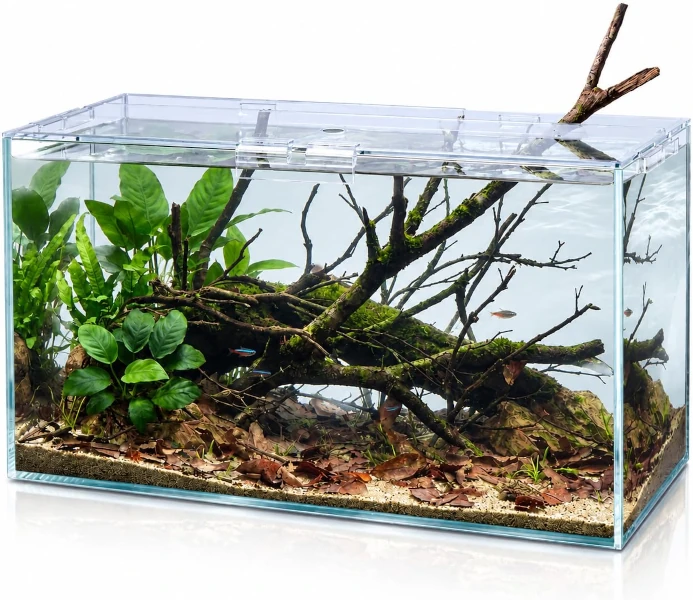
The Wonderfactory 20 Gallon Glass Fish Tank Starter Kit is a rectangular rimless glass desktop aquarium setup. It is constructed from 6mm ultra-clear low-iron glass for distortion-free viewing. Its dimensions measure 25.3″L x 11.7″W x 15.6″H for an actual water capacity between 18 and 20 gallons. The empty container setup weighs 41.6 pounds. The package includes a glass cover lid featuring a 5 cm open-back cutout gap, an internal aquarium filter, and pre-installed soft base protection pads. It comes without an LED light fixture or heater.
With its 25.3-inch horizontal width, ultra-clear low-iron glass, and 20-gallon volume, this setup serves as an excellent foundation for thriving dwarf shrimp colonies. The 20-gallon capacity provides high water parameter stability and massive substrate floor space for aquatic mosses. It works best for housing and breeding colonies of Neocaridina or Caridina shrimp, aquatic snails, small nano fish schools, and Betta fish.
Pros
Cons
COOSPIDER 10-Gallon Glass Desktop Aquarium Kit
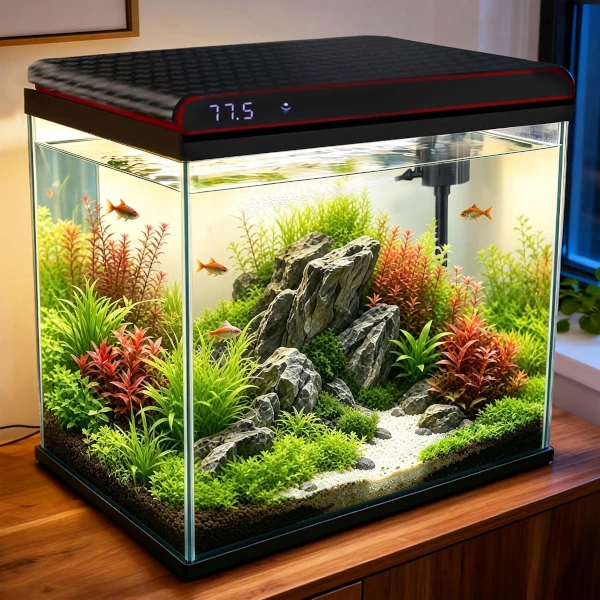
The COOSPIDER 10 Gallon Glass Fish Tank Starter Kit is a rectangular glass desktop aquarium set with a removable flip-top canopy lid. It is constructed from ultra-clear impact-resistant HD glass. Its dimensions measure 15″L x 10.5″W x 16.5″H for a 10-gallon capacity. The empty starter kit weighs 23.2 pounds. The package includes a quiet 3-in-1 internal filter pump with waterfall aeration, an integrated digital water temperature display reading in °F, a 3-color LED light system, and a secure flip lid. It comes without an aquarium heater.
With its 10-gallon volume and built-in real-time °F temperature monitor, this setup provides a functional home for dwarf shrimp. However, the 3-in-1 waterfall pump produces strong water flow, so adding a sponge pre-filter intake cover protects tiny baby shrimp. It works best for housing colonies of Neocaridina or Caridina shrimp, aquatic snails, Betta fish, and Guppies.
Pros
Cons
Vimvins 20-Gallon 6mm Ultra-Clear Glass Desktop Aquarium Kit
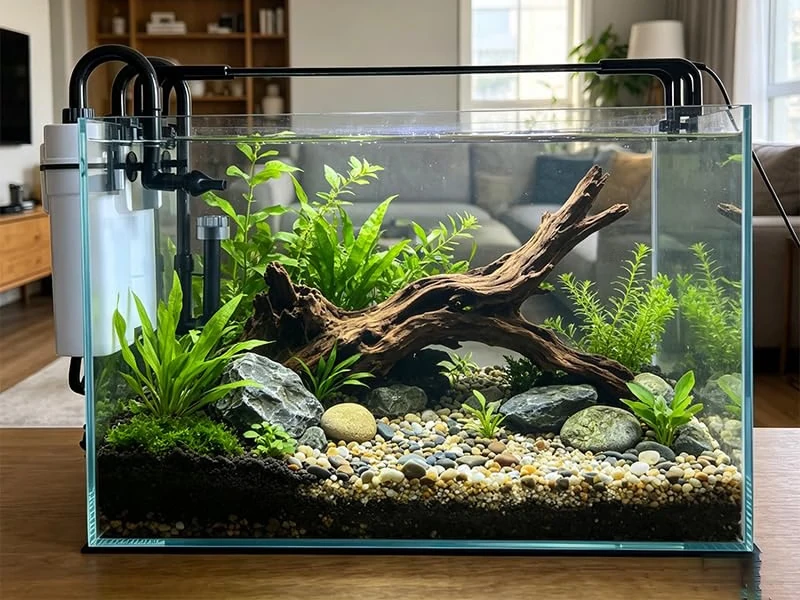
The Vimvins 20 Gallon Glass Fish Tank Starter Kit is a rectangular glass desktop aquarium setup. It is constructed from durable 6mm thick ultra-clear glass. Its dimensions measure 24″L x 12.6″W x 15.74″H for a 20-gallon capacity. The starter package weighs 22 pounds. The package includes a high-capacity internal filter rated at 500 L/H with bio-media and sponges, a 3-mode waterproof LED light fixture, a fitted canopy lid, and a non-slip base mat. It comes without an aquarium heater.
With its 24″L horizontal layout, 6mm glass construction, and 20-gallon volume, this kit provides a spacious foundation for thriving dwarf shrimp colonies. The large volume helps maintain stable water parameters. However, the high 500 L/H filter current requires a flow diffuser or sponge cover to keep baby shrimp safe. It works best for housing and breeding colonies of Neocaridina or Caridina shrimp, aquatic snails, Betta fish, and nano species.
Pros
Cons
minilake 10-Gallon 5mm Ultra-Clear Rimless Desktop Glass Aquarium Starter Kit
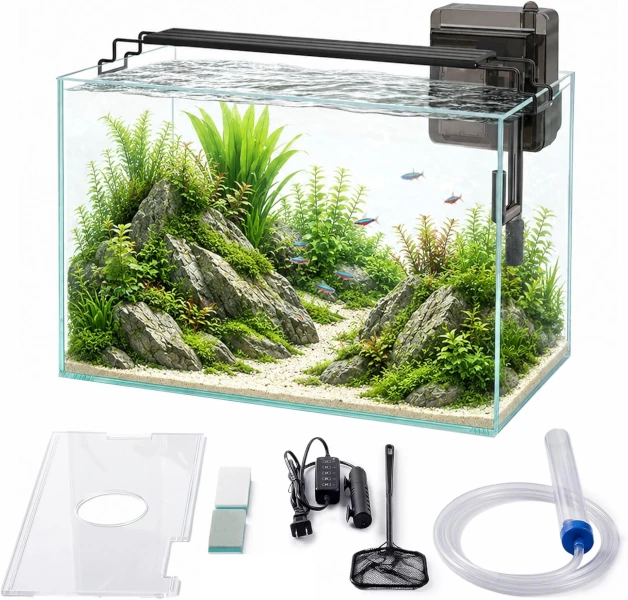
The minilake 10 Gallon Glass Fish Bowl Kit is a rectangular rimless glass desktop aquarium setup. It is constructed from 5mm ultra-clear low-iron glass without structural top or bottom frames. Its dimensions measure 19.7″L x 10.2″W x 11.8″H for a 10-gallon capacity. The empty starter package weighs 18.52 pounds. The package includes a 3-color mode LED light fixture (white, blue, blue-white), an internal power filter, a cover lid, a magnetic glass cleaner, a manual water changer siphon, and a fish net. It comes without an aquarium heater.
With its 5mm low-iron glass clarity, 19.7″L horizontal footprint, and complete maintenance tool kit, this setup provides a solid starter home for dwarf shrimp. Included tools like the magnetic cleaner and manual siphon simplify routine water changes and glass wiping. It works best for housing and breeding colonies of Neocaridina or Caridina shrimp, aquatic snails, Betta fish, and nano species.
Pros
Cons
Beitylite 10.5-Gallon Rimless Desktop Glass Aquarium Kit
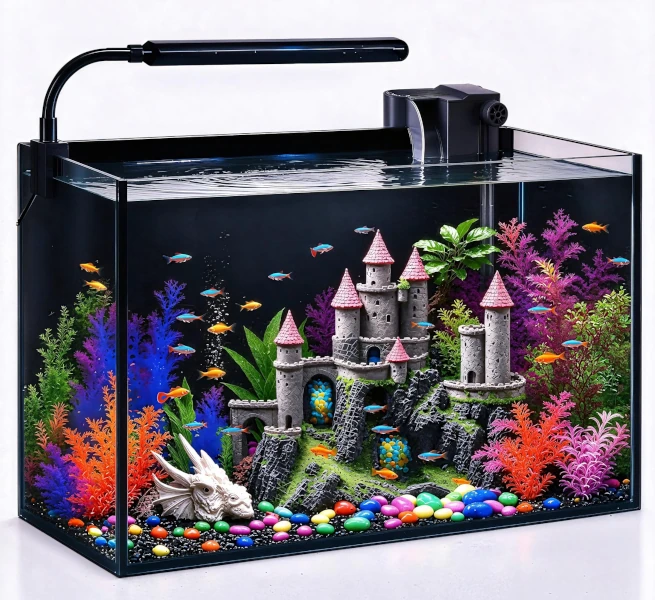
The Beitylite 10.5 Gallon Aquarium Starter Kit is a rectangular rimless desktop glass aquarium setup. It is constructed from ultra-clear glass featuring an integrated black rear background. Its dimensions measure 9.8″L x 12.6″W x 19.7″H for a 10.5-gallon capacity. The empty starter kit weighs 20 pounds. The package includes a quiet internal power filter, an LED light fixture offering 3 color modes and 10 brightness levels, plus aquascaping and cleaning tools. It comes without a cover lid or heater.
With its contrast black background, ultra-clear glass, and 10.5-gallon capacity, this kit offers a vibrant environment for dwarf shrimp. The dark background lowers invertebrate stress and makes natural shrimp coloration pop visually. It works best for housing and breeding colonies of Neocaridina or Caridina shrimp, aquatic snails, Betta fish, and nano species.
Pros
Cons
COOSPIDER 20-Gallon Glass Desktop Aquarium Kit
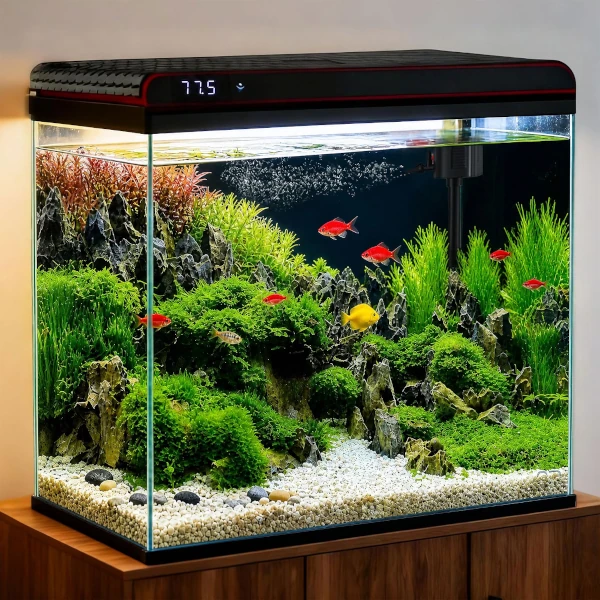
The COOSPIDER 20 Gallon Glass Fish Tank Starter Kit is a rectangular glass aquarium set with a removable flip-top canopy lid. It is constructed from ultra-clear impact-resistant HD glass. It features a 20-gallon capacity. The empty starter kit weighs 32.4 pounds. The package includes a quiet 3-in-1 internal filter pump with waterfall aeration, an integrated digital water temperature display reading in °F, a 3-color LED light system, and a fitted flip lid with a feeding door. It comes without an aquarium heater.
With its 20-gallon capacity and built-in real-time °F temperature monitor, this setup provides a functional home for dwarf shrimp breeding. The spacious volume helps maintain stable water conditions. However, the 3-in-1 waterfall pump produces strong water flow, so adding a sponge pre-filter intake cover protects tiny baby shrimp. It works best for housing colonies of Neocaridina or Caridina shrimp, aquatic snails, Betta fish, and Guppies.
Pros
Cons
Aquarium-Safe PLA Underground Substrate Corner Cave Hideout
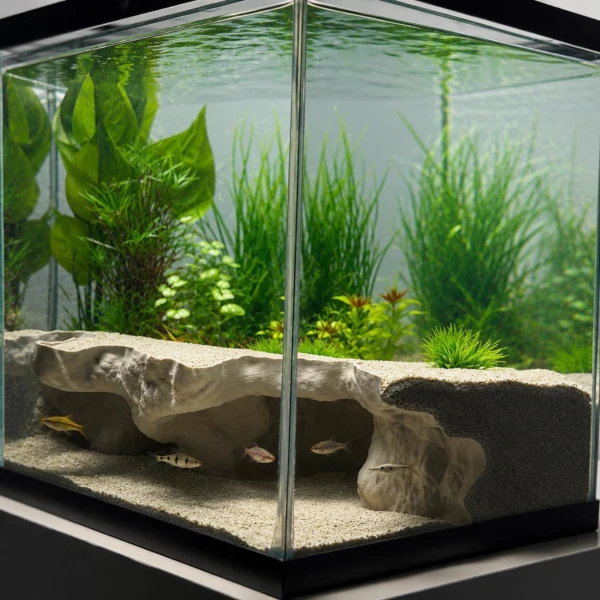
The Aquarium Safe PLA Underground Corner Cave (Large) is a subterranean corner cave decor piece for aquariums and terrariums. It is constructed using 3D-printed non-toxic BPA-free plant-based PLA plastic in a Bone White finish. It features a right-angle corner design that sits flush against glass walls and includes a flat upper ledge for covering with substrate. The package includes a multi-entrance open interior hideout cave. It comes as a decorative ornament without a tank, filter, LED light, or substrate.
This subterranean cave creates an ideal hiding spot and resting space for shrimp aquarium setups. Its space-saving corner profile fits beneath the substrate line to provide a safe dark retreat for molting shrimp while preserving open swimming room. It works best for housing colonies of Neocaridina or Caridina shrimp, Corydoras catfish, snails, and small bottom dwellers.
Pros
Cons
FAQ
Aquariums ranging from 5 gallons to 20 gallons are commonly used for breeding Neocaridina or Caridina shrimp. Capacities of 10 gallons and 20 gallons are ideal for beginners because larger water volumes hold more consistent parameters.
Sponge filters driven by air pumps are the safest choice for shrimp setups. For internal or hang-on-back power filters, adding a fine-mesh sponge intake cover is essential to protect tiny newborn shrimp from getting trapped.
Dwarf shrimp and aquatic snails can easily crawl out of open-top glass containers along corner seams, cords, or filter tubes. A top cover lid also reduces evaporation and stabilizes water hardness levels.
Shrimp require aquatic mosses, hornwort, and fine-leaved plants where they can forage for natural micro-organisms. Underground caves or ceramic tubes are also necessary to provide safe cover during shell molting cycles.
Dwarf shrimp are sensitive to sudden shifts in water temperature, pH levels, and general hardness. Rapid environmental changes can trigger failed molting attempts and lead to colony losses.